Anyone sorting the types of robots should start with the job, not the machine. THWS divides robots into four categories: mobile, service, industry and humanoid. Pick the category that matches the work, then narrow to a specific design.
Picture a reader who has just heard that a warehouse is adding robots, a factory is replacing a manual station, or a relative is curious about humanoids. Each has a different starting point. This page gives the shortest route from each situation to the right category, then points to the detailed comparisons and buying guidance on this site.
The four main categories of robots
The clearest top-level answer to “what are the main types of robots?” comes from the robotics research team at Technical University of Applied Sciences Würzburg-Schweinfurt. THWS lists mobile robots, service robots, industry robots and humanoid robots as its robot categories. This split is useful because it is organised around what the robot does rather than what it looks like, and the task is what you actually know when you start a project.
- Mobile robots. They transport or locate goods and persons, or serve as technology carriers. The category is not limited to land, because mobile robots can also move in the air, at sea and under water.
- Service robots. Their focus is semi-automatic and fully automatic services for humans and facilities. This is the broadest category, so expect it to contain very different machines.
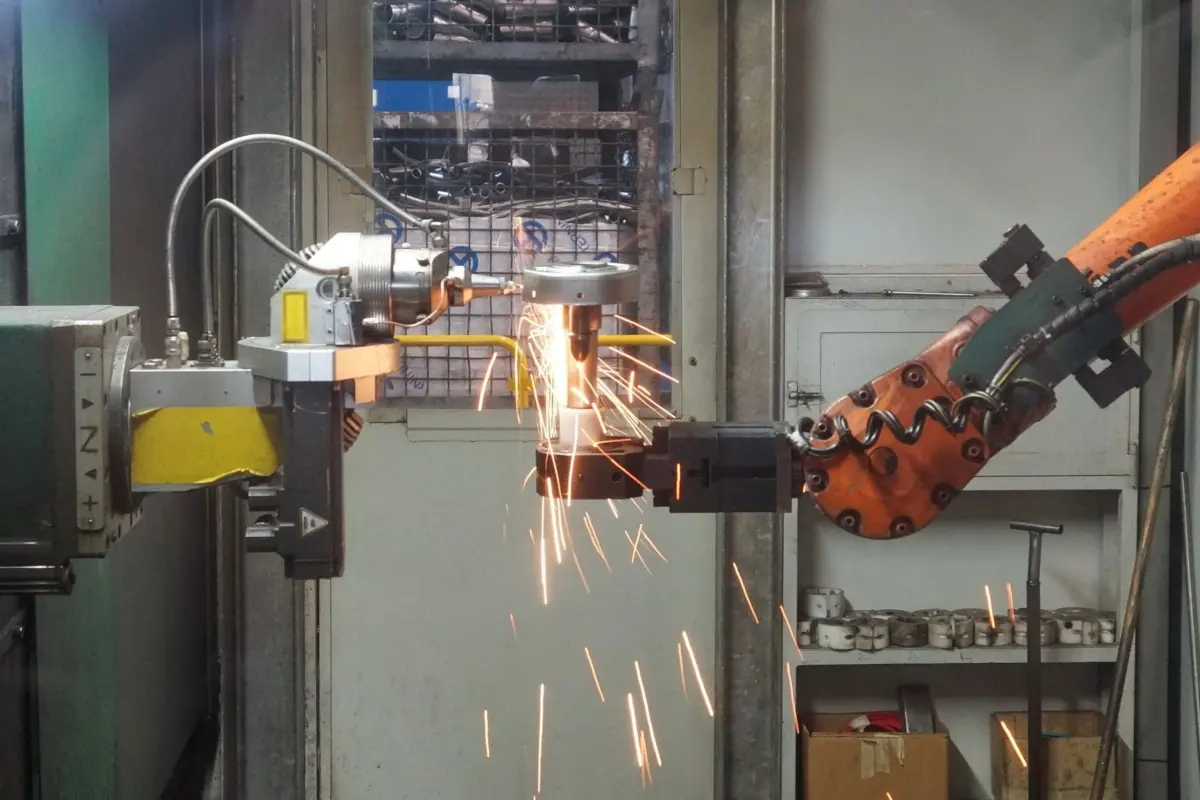
- Industrial robots. THWS notes that industry robots entered the automotive industry at the latest in the 1970s. That history explains why most people picture a factory arm when they hear the word robot.
- Humanoid robots. These are built to resemble a human. The same source is blunt about their state: available humanoids are still far from the physical and mental performance of a human.
The categories overlap in practice. A wheeled machine that carries parts between workstations is a mobile robot working inside an industrial setting, and a robot that serves facilities may also move around. Treat the categories as a first filter, not a strict taxonomy. If a machine fits two, ask which one describes its main job.
The sections below follow reader goals. Each opens with the situation it suits, so you can jump straight to your own route.
How robots work
Robots work by combining a body that can move with software that decides how it should move, and the balance between those two parts differs by type. The THWS description of its categories shows two clear examples of this split between hardware and decision-making.
Mobile robots: navigating and planning
For mobile robots, the hard problem is getting from one place to another without human steering. THWS says that autonomous navigation, mapping as well as path and motion planning are used. In plain terms, the robot needs a representation of its surroundings, a way to know where it is within that representation, and a method for choosing a route and the movements that follow it. When you compare mobile robots, the quality of that software matters at least as much as the wheels or motors.
Industrial robots: sensing and adapting
Industrial robots are often thought of as repeating one motion forever. THWS points out a more capable pattern: visual perception via optical sensors gives industry robots the ability to adjust their motion dynamically to changed conditions. So the practical question for a buyer is not only how fast or how strong the robot is, but also whether the task will vary from one part to the next and whether the robot can see well enough to cope.
The body of the robot
Hardware shapes what software can achieve. An articulated arm, for example, has an arm that resembles a human arm, with elbow, shoulder and wrist-like joints, according to Robotic Automation Systems. Other arm designs trade that flexibility for speed, simplicity or a fixed workspace, which the comparison table later on this page sets out.
Route one: factory and production work
Choose this route if your goal is to automate a station that welds, packs, moves parts or tends a machine. It leads from the broad industrial category through arm designs to the question of working beside people.
Start with the arm style
The arm is the most recognisable industrial robot, and the style you pick sets the shape of the workspace, the speed and the cost. For a deeper tour of the whole family, read Types Of Industrial Robots: A Practical 2026 Guide To Choosing The Right Robot For Your Facility. If you already know you need an arm and want to choose between layouts, the guide to types of robot arms compares them head to head.
The table below puts the main arm designs side by side so you can see which one fits the job before reading further.
| Arm type | Motion and workspace | Typical jobs and relative traits | Planning use |
|---|---|---|---|
| Articulated | Arm resembling a human arm; can have up to 10 joints | Printing, packaging, welding, machine tending, material handling and metalwork | The default starting point when the task is varied or the part must be reached from different angles |
| Cartesian | Linear movements give a cube-shaped workspace | Suits tasks laid out along straight axes | Consider when the work area is a box and straight-line motion is enough |
| SCARA | X, Y, Z and rotary motion in one package | Small footprint, simplicity and low cost suit small electronic manufacturing | Shortlist for compact assembly cells where space and budget are tight |
| Delta | Built for rapid movement over a product flow | Fastest and most expensive of the types listed; best for fast pick and place or product transfer | Justify only when throughput is the main constraint and the budget allows |
| Polar | Older design | Considered obsolete technology, but can still be used where cost is a major factor | Rarely the first choice; look at it only for cost-driven jobs |
The arm descriptions and applications in this table come from Robotic Automation Systems’ overview of industrial robot types, a commercial integrator, so use them as a first screen and confirm specifications on manufacturer datasheets.
Match the arm to the task, not the other way round
The table suggests a simple order of questions. If the task needs reach and flexibility, articulated arms are the broadest answer. If the task is small, repetitive and fits in a compact cell, SCARA is the design to examine first. If speed on a moving flow of products is the driver, delta robots are built for that, but they are also the most expensive of the group, so the speed has to earn its cost. A Cartesian layout makes sense when the work is organised in straight lines inside a box-shaped area. Polar arms are the one to avoid unless a very particular cost situation applies.
Do not forget the gripper
An arm moves, but a gripper does the handling. Many buyers compare arm specifications for weeks and leave the tooling decision until late, which is backwards when the part is awkward to hold. If your parts are flat, smooth or otherwise suited to suction, the guide to Vacuum Gripper Robots: The Practical Guide To Picking, Using, And Integrating Them In 2026 explains how to pick and integrate one.
Industrial versus collaborative robots
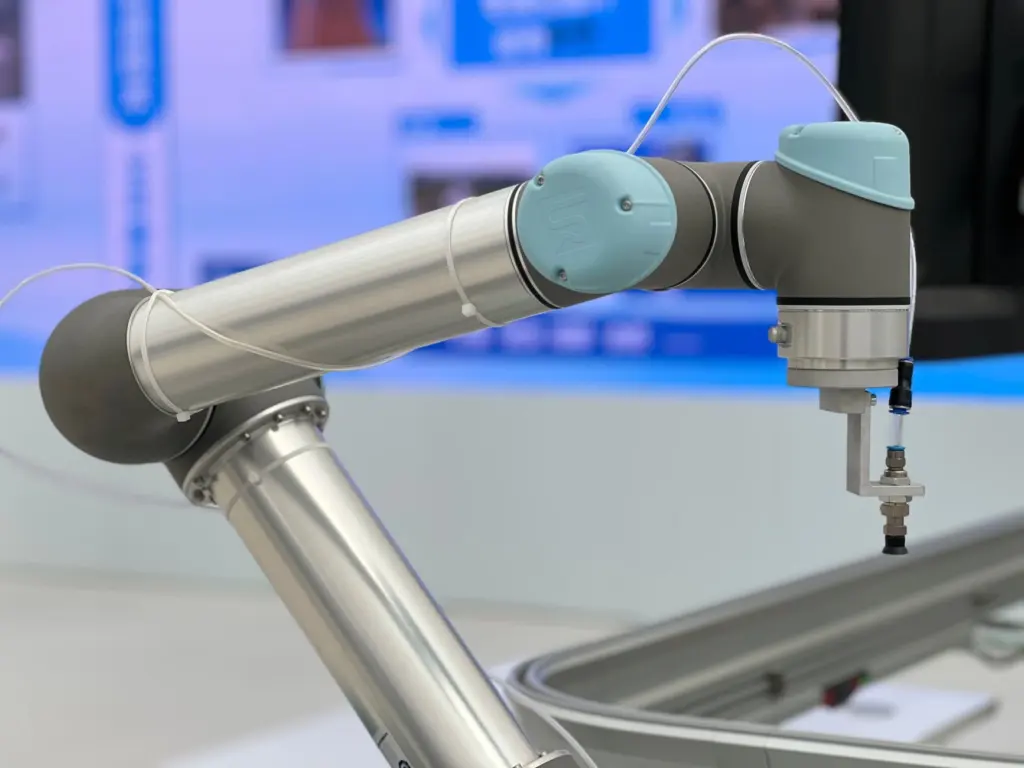
The difference between industrial and collaborative robots is mainly about how the robot interacts with people. THWS describes collaborating robots, called cobots, as robots equipped with innovative interaction capabilities, and says they form a booming segment in industrial robotics. A traditional industrial robot is designed around the task and the cell it works in. A cobot is designed with the shared workspace in mind.
For a decision, that means asking whether people need to work close to the robot. If the work is fully separated from staff, a conventional industrial robot is the straightforward match. If staff and robot will share the area or hand parts back and forth, a cobot deserves the first look. To understand what the term covers, including how cobots differ in practice, read the guide that answers what is a collaborative robot.
Route two: moving goods, people and equipment
Choose this route if the job is transport, whether that is carrying items across a site, locating things or carrying equipment as a platform. This is the mobile robot category.
Per THWS, mobile robots transport or locate goods and persons or are used as technology carriers. That last phrase matters: a mobile robot can be a base that carries other instruments or tools. When a project’s real need is to take a sensor or tool to different places, a mobile platform is the type to consider, even if no goods are being moved.
Land, air and water
Mobile robots are not limited to floors. THWS notes they can move in the air, at sea and under water. That widens the category to include flying and underwater machines. Readers who wonder is a drone a robot will find the aerial case worked through in a dedicated guide, which is a good next stop if flight is part of your interest.
Choosing between transport vehicle types
Within indoor transport, the terminology can be confusing, because similar-looking vehicles are sold under different names. The agv vs amr comparison sorts out the vocabulary and shows what each term implies for your site. Since navigation, mapping and planning are the capabilities THWS names for mobile robots, those are the features to ask suppliers about first. A vehicle with weaker navigation software will demand more from your site layout and your staff.
Route three: services for people and facilities
Choose this route if the robot will support people or look after a building or site, rather than manufacture something. This is the service robot category, and it is wide.
THWS gives the focus as semi-automatic and fully automatic services for humans and facilities. The phrase “semi-automatic” is a useful reminder that many service robots work alongside a person rather than replacing them. When you evaluate one, decide early which tasks you want the robot to complete alone and which will stay with staff.
Sector-specific robots
Many service-style machines are best understood by the sector they serve. Each of these has its own guide on this site:
- Healthcare. The overview of types of medical robots explains what each kind does.
- Farming. The guide to types of agricultural robots covers the main kinds and the jobs they take on.
- Building sites. Construction robots are covered by type and by real use.
Starting with the sector is usually quicker than starting with the technology, because the working environment, the people nearby and the rules that apply to them narrow the options sharply.
Robots built to interact with people
Some robots exist mainly to communicate or keep company. If that is your interest, the guide that answers what is a social robot explains the purpose of these machines and how they differ from task-focused ones.
Route four: humanoids and human-like machines
Choose this route if you are curious about robots built in a human shape, or you are considering whether a humanoid could do work today. The honest planning answer is to treat humanoids as a field to follow rather than a default purchase.
THWS gives two cautions that anyone should weigh. The handling effort of humanoid robots is much bigger than that of other robot types, and the humanoids available are still far from the physical and mental performance of a human. In a buying decision, that points toward a specialised machine whenever the task is well defined. A wheeled carrier or a fixed arm is likely to be a better match for a single known job than a human-shaped body.
Humanoids still earn attention for what they teach about design. For the engineering side, read What Is Humanoid Robot Design? A Practical Guide To Building Human-Like Robots In 2026. For the business side, including how firms build, fund and deploy these machines, see Inside The Humanoid Robot Company: How Today’s Firms Build, Fund, And Deploy Humanlike Robots (2026 Guide). If the vocabulary itself is the sticking point, the robot vs android guide untangles the terms people use for human-like machines.
Newer body designs worth knowing
Some robot ideas cut across the four categories because they describe how a robot is built or organised rather than what job it does. Two are worth a look if the standard arm-and-wheel picture feels limiting. The guide that explains what is soft robotics covers machines built from flexible materials, and the explainer on what is swarm robotics covers groups of robots that work together. Neither replaces the category choice above, but both show where the field is widening, and both may change which type is the best fit in a particular niche.
What robots cost and how to compare price
Price depends on class, design and configuration, and a single dollar range across all robot types would mislead. The solid evidence available is about relative position, and it is useful for ranking even without figures.
- Delta arms sit at the top of the arm group. Robotic Automation Systems says delta robots are the fastest and most expensive of the types it lists. Pay that premium only when pick-and-place speed is the bottleneck.
- SCARA arms sit toward the economical end. The same source highlights small footprint, simplicity and low cost for small electronic manufacturing.
- Polar arms survive on cost. They are considered obsolete technology, but can still be used where cost is a major factor.
- Humanoids carry a hidden cost. THWS says their handling effort is much bigger than that of other robot types, so the effort of running one adds to whatever the purchase price is.
Because the evidence ranks classes rather than pricing them, get the final numbers from manufacturer datasheets and written quotes for the specific configuration. When comparing quotes, look beyond the robot itself to tooling, the work cell and the effort of setting it up, since these can change which option is actually cheapest for your job.
Choosing where to start
Use the following order to decide which route to read first.
- Write down the job in one sentence. If it makes or handles products at a fixed station, take the factory route. If it moves things or carries equipment, take the mobile route. If it supports people or a facility, take the service route.
- Check whether people share the space. For a factory job, this decides between a conventional industrial robot and a cobot.
- Pick the arm or vehicle style. Use the arm comparison table for arms, and the transport vocabulary guide for mobile robots.
- Ask about sensing and software. Optical sensors let industrial robots adapt to changed conditions, and navigation and planning drive mobile robots. A supplier who cannot explain these has told you something.
- Be sceptical of humanoids for a defined task. Choose a specialised machine unless the human shape is the point.
- Request datasheets and quotes. Rank by class first, then price the specific configuration.
Following these steps keeps the decision tied to the work. It also keeps the reading list short, because each route points to only the guides relevant to that situation.
Frequently asked questions
| Question | Answer |
|---|---|
| Which robots are not limited to the ground? | Mobile robots. THWS says they can move in the air, at sea and under water as well as on land. |
| Which robot arm type is fastest? | Delta robots, according to Robotic Automation Systems, which also calls them the most expensive of the types it lists and best for fast pick and place or product transfer. |
| Are cobots a niche product? | No. THWS describes collaborating robots as a booming segment in industrial robotics, thanks to their interaction capabilities. |
| Can a humanoid robot match a person today? | Not yet. THWS says the humanoid robots available are still far from human physical and mental performance, and that they take much more handling effort than other types. |
| When did industrial robots reach car factories? | At the latest in the 1970s, according to THWS. |