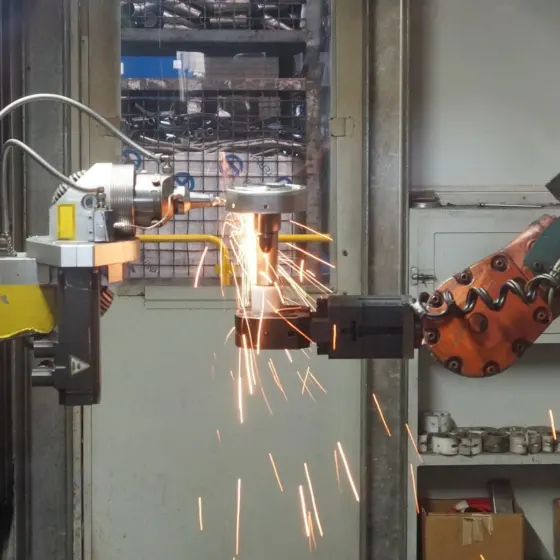

A contractor weighing construction robots should start with the task. Layout marking, rebar tying and drone surveys are already in real use, while robotic coating and drone brick-stacking sit nearer pilot or research stage.
This guide sorts the main machines by what they do and how mature they look. It is one application of the wider types of robots. If the word “robot” itself is the sticking point, robot vs android explains the vocabulary.
Construction robots at a glance
Lamar University’s construction management programme names six types with a growing presence on construction sites: bricklaying, autonomous excavators, layout, demolition, drones and inspection, and 3D printing or prefabrication. The table adds the maturity signals that manufacturers state publicly.
| Robot type | Main task | Maturity signal | Planning use |
|---|---|---|---|
| Layout marking robot | Prints layout from digital plans onto the floor | Deployed (Raise Robotics) | First robot to trial on a site with digital plans |
| Curtain wall fastening robot | Fastens curtain wall embeds at the slab edge | Deployed (Raise Robotics) | Fits façade packages |
| Robotic coating | Coats large structures | Pre-release (Raise Robotics) | Watch, do not plan around yet |
| Drones and ground inspection robots | Aerial images, 3D maps, hazard checks | Listed among six types with growing site presence | Progress monitoring on large sites |
| 3D printing systems | Extrude concrete or composites layer by layer | Some systems print walls or housing units on-site | Suits teams ready for a specialist method |
| Bricklaying, excavator and demolition robots | Laying bricks, digging and grading, confined demolition | Listed among six types with growing site presence | Check task fit and site rules first |
Maturity labels for layout, fastening and coating come from Raise Robotics; task descriptions and the six-type list come from Lamar University.
Layout and fastening robots
Layout marking is the clearest example of a robot doing routine site work today. Raise Robotics lists layout as deployed, with layout printed from BIM to within ±3 mm. Lamar also notes that layout robots and 3D printing systems use digital blueprints to reach millimeter-level accuracy.
The same manufacturer lists curtain wall fastening at the slab edge as deployed. Its work cell is configurable and mounts on its own AGV or on a Genie scissor or boom lift, so the robot works from equipment a site may already hire.
These robots suit projects with clean digital models and repeatable tasks. They give little benefit where plans change daily or the model is not trusted. Robotic coating for large structures is only in pre-release, so keep it on a watch list rather than a procurement plan.
Rebar tying robots
A rebar tying robot binds reinforcing steel intersections, a repetitive job on slabs and decks. Automated Rebar Construction states that its robots cover rebar tying, rebar placement, material handling and real-time monitoring directly on the jobsite.

Its TyBOT rebar tying robot moved from rental to sale: an announcement dated 11 Jan 2026 says it became available to purchase, having previously been offered only as Robot as a Service (RaaS). That change suggests enough demand for owners to commit to buying, though it does not say how many sites use it.
Rebar tying suits contractors with large, repetitive reinforcement areas. Renting first lowers risk; buying makes sense once the task recurs.
Drone surveys and site inspection robots
A drone survey is the most accessible entry point. According to Lamar University, drones capture aerial images, generate 3D maps and support progress monitoring across large sites. The result is a current picture of the site without sending people to every corner.
Ground-based inspection robots work differently. They enter tight or unsafe spaces to collect visual data and can flag hazards, so they help where a person would otherwise have to go in. Together, the two answer how site inspection robots work: they carry sensors to places people cannot easily reach and return images and maps for review.
Drones that build are a different matter. A 2012 research demonstration at the FRAC Centre in Orleans, France programmed a fleet of drones to lift and stack polystyrene bricks. Treat that as a demonstration, not site practice. Use drones for surveying and monitoring, which is the supported use.
3D concrete printers
A 3D concrete printer is a robotic system that builds by deposition. Lamar describes 3D printing robots as extruding concrete, polymer composites or other materials layer by layer to form structural components.
So can robots build houses? In part, yes. Some systems print entire walls or housing units on-site, while others support modular construction. A printer produces the walls; other trades and systems still complete the building, and the sources give no whole-house output figures.
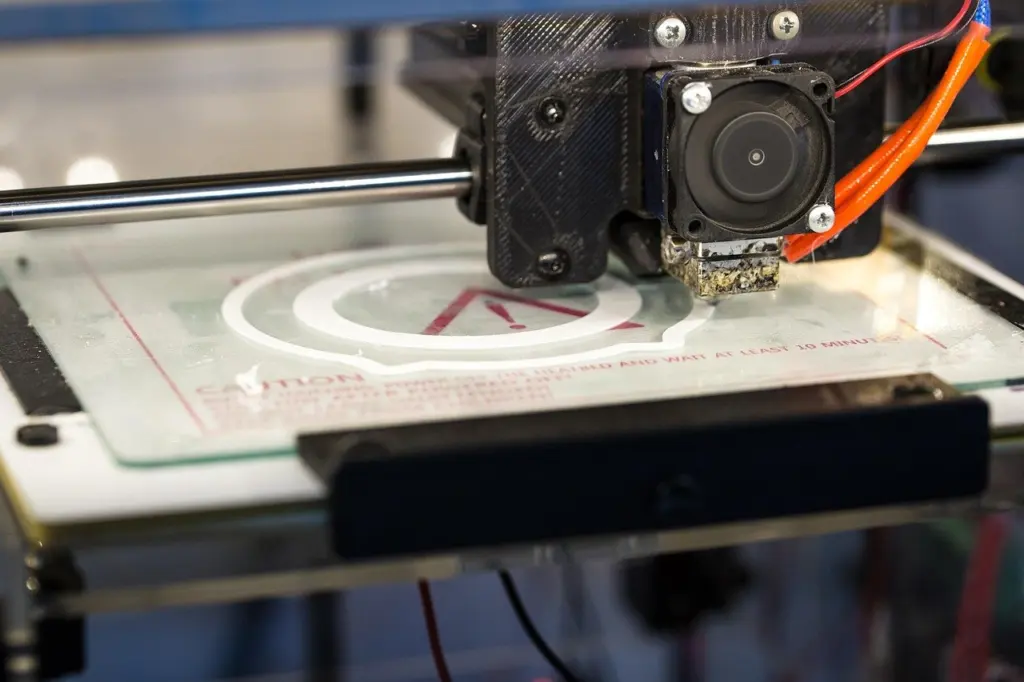
Printing suits teams willing to adopt a specialist method for walls or modular parts. For a standard build where a conventional crew is already working, it is better treated as a project to evaluate than a routine tool.
Bricklaying, excavator and demolition robots
These three belong to the heavier end of the range. Bricklaying robots lay bricks directly where construction is happening. Autonomous excavators use GPS, IMU sensors and AI to operate with minimal human input, covering digging and grading.
Demolition robots are more compact than traditional excavators and can operate in confined or hazardous spaces such as basements, bridges and damaged buildings. They are remote-guided, which keeps the operator out of danger.
- Bricklaying robots suit repetitive wall work where the design allows machine-laid courses.
- Autonomous excavators suit open earthworks. Rules for autonomous machines operating beside workers on active sites are still developing, so confirm site safety requirements before committing.
- Demolition robots suit tight or unsafe spaces, where reduced human exposure justifies a specialist machine.
Off-site prefabrication robots
Not every construction robot works at the building site. Lamar separates on-site robots, which lay bricks, inspect structures and mark foundations, from off-site robots that handle prefabrication in factories. Off-site machines cut timber, assemble wall panels and produce structural components.
Factory conditions are controlled, so off-site robots suit builders who can move work into panels or components. Many of the machines above are the same families that appear in the Types Of Industrial Robots: A Practical 2026 Guide To Choosing The Right Robot For Your Facility, moved into a building context.
Cost and readiness limits
Money is the first constraint. Lamar notes that basic robotic systems can require six-figure investments before software, integration and maintenance. That helps explain why rental models such as RaaS appeal before purchase.
Rules are the second. Clear frameworks for autonomous machines working alongside people on active job sites are still developing. Pilot-stage robots therefore carry both technical and compliance questions that deployed layout or fastening tools largely avoid.
Decision checklist
- Name the repeated task, such as layout, tying, surveying or wall building.
- Match it to a type that is deployed rather than pre-release or research.
- Confirm the site has digital plans if the robot needs them.
- Compare renting with buying against how often the task recurs.
- Add software, integration and maintenance to the price before approving.
- Check site safety rules for any robot working beside people.
Frequently asked questions
What robots are used in construction?
Layout, rebar tying, fastening, drone and ground inspection, bricklaying, excavation, demolition and 3D printing robots, plus factory robots for prefabrication.
Can robots build houses?
Some 3D printing systems print walls or whole housing units on-site, but that is one part of a build rather than a finished house.
How do site inspection robots work?
Drones fly over the site to capture images and maps, while ground robots enter tight or unsafe areas to record visuals and flag hazards.
Do all construction robots work on the building site?
No. Prefabrication robots work in factories, cutting timber and assembling panels that are later brought to site.