| Design choice | What it means | Planning use |
|---|---|---|
| Human-like body plan | Typically a torso, head, two arms and two legs | Gives a shared reference for comparing models. Check what each model actually includes. |
| Electric actuators | Common in commercial designs, usually paired with gearing and control electronics | Start here when assessing commercial platforms, and ask about the gearing and drive electronics. |
| Hydraulic actuators | Used on some research platforms instead of electric drives | Treat as a research-platform choice and confirm the intended use before assuming suitability. |
| Pneumatic actuators | Named alongside electric and hydraulic as a way to produce smooth, coordinated movement | Ask the maker why this family was chosen for a given joint. |
| More joints | Expand reach and dexterity, but each adds components, wiring, calibration and control work | Pay for extra joints only where the task needs the reach or dexterity. |
| Sensor fusion | Several sensor streams are combined to estimate the robot’s body and its surroundings | Check that both body-state sensing and environment sensing are present. |
These descriptions come from a humanoid robot overview and a humanoid robotics guide.
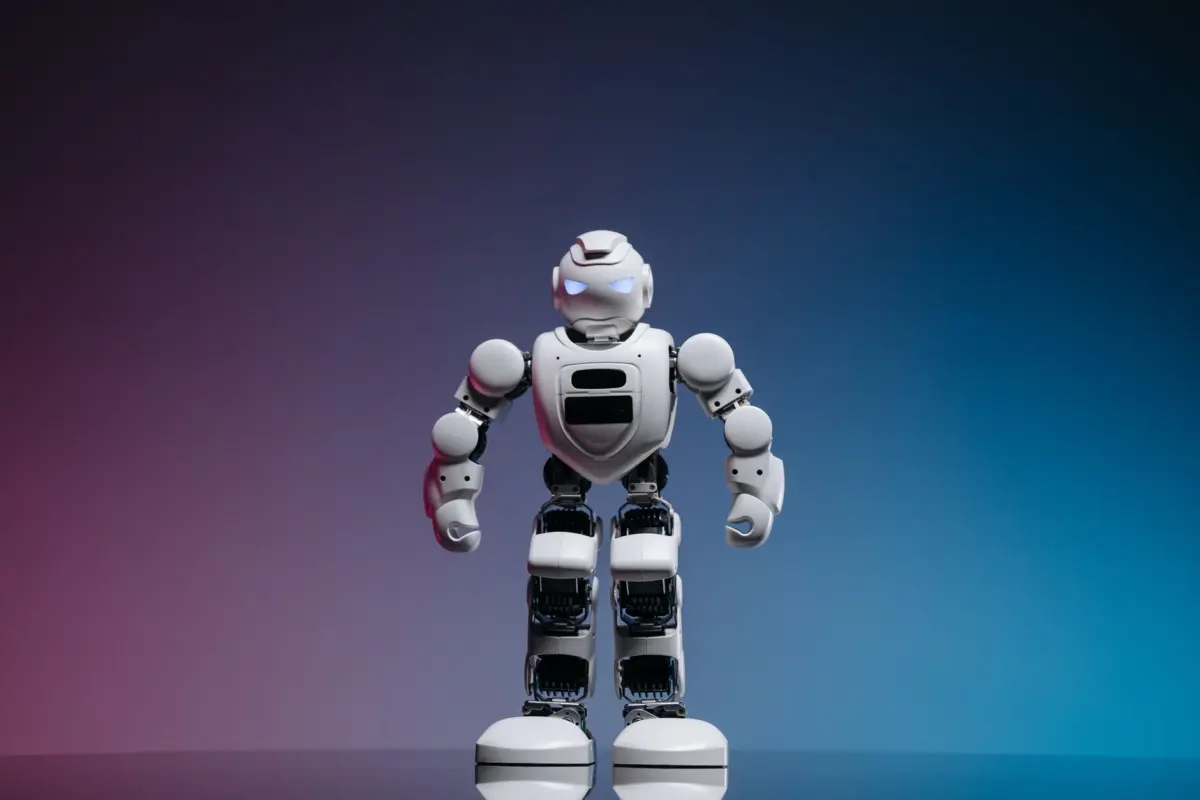
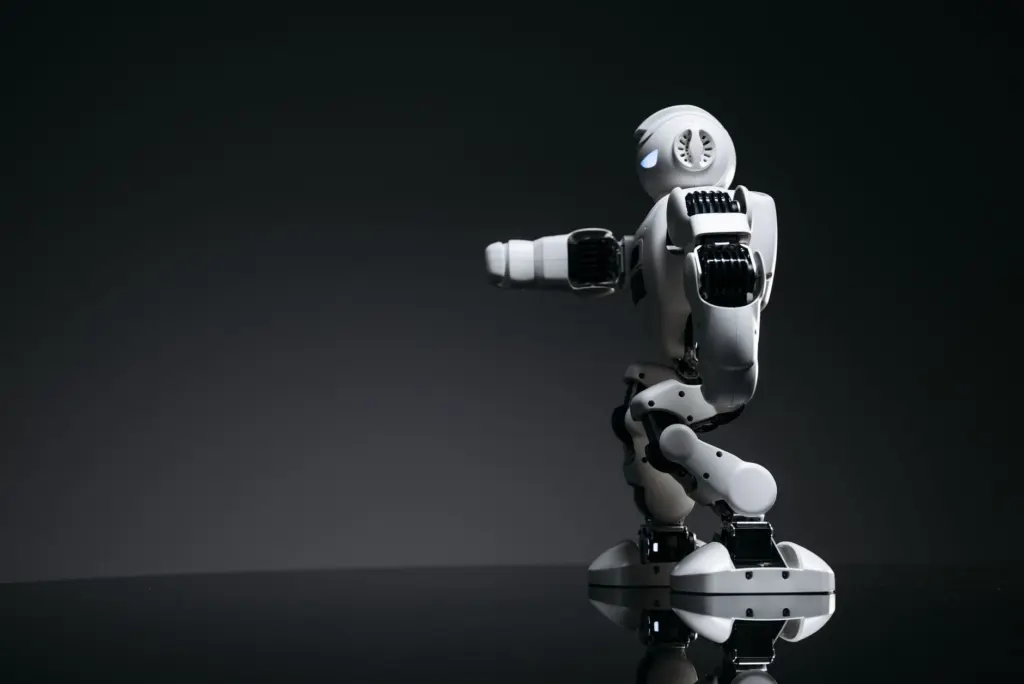
What is humanoid robot design? It is the practice of building robots with a human-like body, typically a torso, head, two arms and two legs, to work in spaces made for people. Every added capability costs weight, power or control effort.
For how humanoids sit beside other machines, see our overview of types of robots. The sections below start with what the design choices mean for a buyer or planner, then explain the hardware, sensing and control behind them.
What humanoid design means in practice
A humanoid is built to fit a world made for people, and that shapes every other decision. A research paper on Humanoid Factors defines the field as the design of humanoids and their surrounding environments so they can operate safely, efficiently and intelligibly in human-centric settings. The same paper notes that humanoids inherit human physical affordances such as doorways, stairs and tools.
The inheritance runs in both directions. The paper adds that humanoids also inherit social expectations, including expectations of eye contact, emotional tone and moral reasoning. Those shared capabilities create opportunities for seamless collaboration and risks of misalignment. A robot that looks human invites people to treat it as one, so appearance, motion and behaviour have to match what it can actually do.
Why the usual scorecard falls short
The same authors argue that conventional task completion metrics overlook human cognitive and interaction principles. A robot can finish a job and still be hard to work beside. When comparing platforms, ask how a robot behaves around people as well as whether it completes the task.
Where a humanoid form pays off
The human body plan is most useful where the workplace cannot easily be changed and the robot must use existing doors, stairs and tools. Where a task is fixed and repetitive, a machine built for that one task may suit better. Our guide to Types Of Industrial Robots: A Practical 2026 Guide To Choosing The Right Robot For Your Facility covers those alternatives.
Actuators and joints
Actuators are the parts that move the joints, and the choice among electric, hydraulic and pneumatic types sets much of a humanoid’s character. Humanoid guides describe all three as ways to achieve smooth, coordinated movement. Advanced designs often use multiple actuators per joint, which raises complexity in return for finer motion.
Electric motors are now common in commercial designs, typically paired with gearing and control electronics. Some research platforms have used hydraulic systems instead. Designers balance strength, speed, weight, efficiency, impact tolerance, heat and backdrivability, and no actuator wins on all of them. Gaining on one usually costs another, so the right choice follows the job the robot will do.
Degrees of freedom
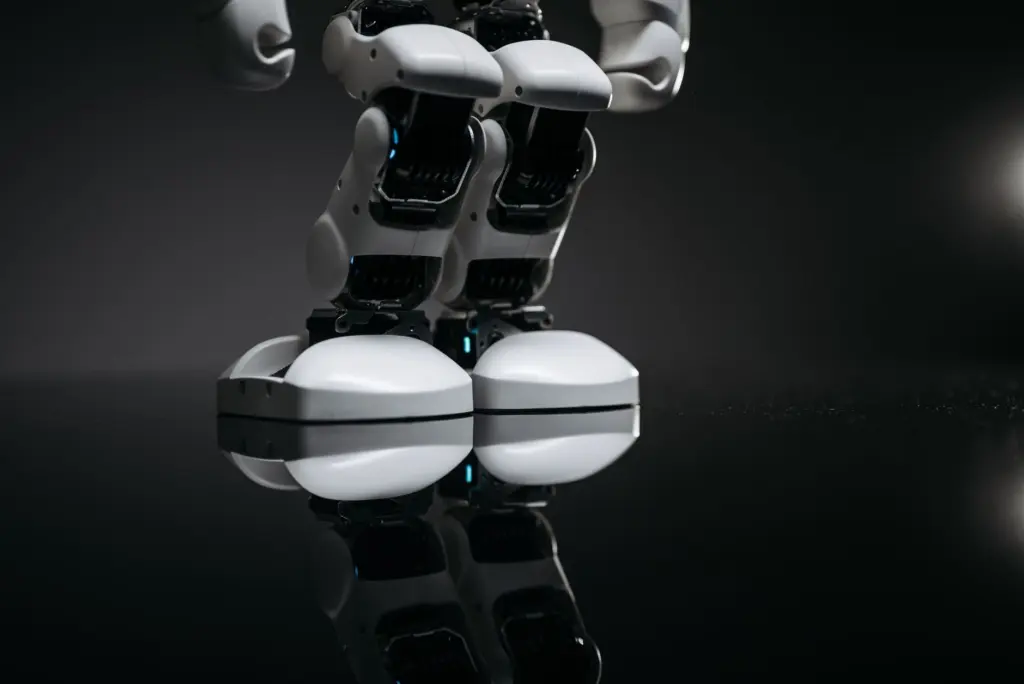
More joints can expand reach and dexterity, but each adds components, wiring, calibration and control work. Hands are the clearest case, because fine finger motion multiplies the joint count. If a job only needs to pick and carry, a simpler gripper may do it, and our guide to Vacuum Gripper Robots: The Practical Guide To Picking, Using, And Integrating Them In 2026 shows one such alternative.
Drive electronics
Motor drive hardware matters too. Texas Instruments states that its GaN technology for humanoid robots reduces the size of the power stage by more than 50% compared with MOSFET alternatives and enables pulse-width-modulation control in the hundreds of kilohertz range. That is a vendor claim, but it shows why compact drive electronics are a real design lever when space inside a limb is tight.
Sensors and sensor fusion
Humanoids sense their own bodies and their surroundings, and the two jobs use different sensors. Joint encoders report the angle and speed of each joint, while inertial measurement units estimate the robot’s orientation and acceleration. Depth cameras or lidar can help build a three-dimensional map of the space.
Contact sensing completes the picture. Force, torque and tactile sensors reveal contact with the floor, a tool or a person. Texas Instruments notes that humanoid robots require constant real-time measurement of motor currents, voltages and position, and that position sensing calls for high-performance optical, magnetic and inductive sensing in compact encoders.
Combining the streams
Sensor fusion means the robot combines several streams to estimate its body and surroundings. No single sensor type covers both. Navigation then depends on algorithms that process the sensor input for obstacle detection and path planning, as the TI humanoid overview describes. When assessing a platform, a mix of body-state, vision or depth, and contact sensing is a better sign than a long list of one sensor type.
Balance, walking and motion planning
Humanoids balance and walk through layers of control. Low-level controllers regulate joint position, velocity and force many times per second. Higher layers coordinate balance, walking, reaching and grasping.
The simplest case is static walking, where the center of gravity stays within the supporting sole. Faster or more fluid gaits give up that margin, so they lean harder on sensing and fast control.
From skills to tasks
Motion planning links the layers to a goal. A task planner connects individual skills into actions such as locating a tote, walking to it, lifting it and placing it. Reinforcement learning in simulation lets a system practice large numbers of movements without repeatedly damaging hardware. Simulation helps most for learning motion, but real hardware still has to be tested.
Human-robot interaction and safety
Interaction design decides whether a humanoid is usable around people. The Humanoid Factors framework is structured around four pillars: physical, cognitive, social and ethical. Physical design covers reach and contact, while cognitive and social design cover how clearly a robot signals what it is doing and how it meets expectations such as eye contact.
Contact sensing is the practical link between these ideas and hardware. Because force, torque and tactile sensors reveal contact with a person, they give the control system a way to respond when a touch happens. Safe, predictable behaviour near people is a design requirement from the start, not an add-on after the hardware is built.
Questions to ask before choosing a platform
- Which environment must it work in? If doorways, stairs and hand tools cannot be changed, the human body plan has a clear case. If they can, a simpler machine may serve.
- What does each joint add? Ask what task justifies each added joint, given the wiring, calibration and control work it brings.
- Which actuator family and why? Electric drives are common in commercial designs, so a different choice should come with a reason tied to strength, speed, weight, efficiency, impact tolerance, heat or backdrivability.
- How is it tested around people? Look beyond task completion toward evidence of safe, intelligible behaviour in shared spaces.
Frequently asked questions
Does a humanoid robot need two legs?
No. Two legs are common, not mandatory. The International Federation of Robotics reference described in the overview stresses human-like appearance, the ability to perform tasks in environments designed for people, and human-like sensing.
Why does real-time control matter for a humanoid?
Real-time control means the system gathers data, processes it and updates within a defined time window. Texas Instruments notes that missed windows degrade stability and precision, which is why humanoids depend on fast sensing and processing.
Can a humanoid work without a human operator?
It depends on the setup. Autonomy is a spectrum, from a robot working independently inside a known cell to direct teleoperation. The right level depends on how predictable the task and surroundings are.