| Situation | Supported effect | Planning use |
|---|---|---|
| Smooth, flat, rigid, non-porous parts such as glass, sheet metal, plastic or sealed boxes | Suction cups are best suited to this surface type | Start with standard cups. The remaining decisions are cup size, number and material. |
| Porous or textured surfaces | Standard cups are poorly suited, though a foam lip cup could help | Trial a foam lip cup or a foam pad before committing to a cup layout. |
| Cardboard, untreated wood, or shifting surfaces such as bags | Foam pads suit porous materials and surfaces that move | Choose foam pads, then check the air budget and pad area. |
| Foam pad operation | Consumes high volumes of compressed air and gives low gripping force for a given surface area compared with cups | Plan for a larger pad footprint and a compressed-air supply that can keep up. |
| Part weight and grip area | Together they directly affect picking capability | Settle weight and available grip surface before choosing any hardware. |
| Hot parts | Foam or cup material must withstand the part temperature | Record the part temperature before ordering cups or pads. |
| No compressed air at the cell | Electric vacuum palletizing grippers for cobots are listed with payloads up to 30 kg and up to 20 kg, with no compressed air requirement | Consider an electric vacuum generator when air supply is the constraint. |
Figures and conditions above come from the Intelligent Integrators guide to robot vacuum grippers and the Electromate robot gripper listings.
A vacuum gripper robot holds parts with suction: vacuum between pad and part lets atmospheric pressure push the part toward the gripper. It suits smooth, non-porous surfaces best, and the pad, vacuum generator and part weight decide the rest.
A vacuum gripper is one end-effector choice for the robot arms described across the types of robots. The sections below turn surface, weight and air-supply conditions into selection decisions, then explain the mechanism behind them.
Surface and material decisions
What the part is made of, and how its surface behaves, decides whether a vacuum gripper will seal at all. Settle this before you look at pumps or ejectors.
Smooth, rigid parts
Intelligent Integrators describes cups as best suited to smooth, flat, rigid, non-porous products, with glass, sheet metal, plastic and sealed boxes as examples. If your line handles these, a cup-based gripper is the default and you can spend your effort on sizing rather than on exotic pad designs.
Porous, textured and shifting parts
Cups are a poor match for porous or textured surfaces, and that is where many first designs fail. Two routes are supported:
- Foam lip cup: a modest change that may rescue a cup layout on a mildly difficult surface.
- Foam pad: the better fit for cardboard, untreated wood and shifting surfaces such as bags. The trade-off is high compressed-air consumption and lower gripping force for a given area, so choose it only when the surface rules out cups.
Sizing the gripper to the part
Sizing starts from the part, not the catalogue. Part weight and the surface area available to grip directly affect picking capability, and weight and size determine suction cup size and number. In plain terms, the holding capacity you specify has to exceed the weight of the part, and a larger usable grip area gives you more room to achieve that.
- Weight first: a heavier part calls for larger or more cups, so confirm the real part weight rather than a nominal figure.
- Grip area second: measure the flat, sealable region, not the whole part. A part with little usable surface limits the gripper whatever the vacuum source can deliver.
- Surface and temperature third: these decide pad type and material, covered below.
- Rated values from the supplier: take capacity figures from the cup manufacturer’s datasheet for the exact cup you intend to use, and run a trial with real parts.
Larger or irregular workpieces are usually handled with several cups on a frame, which is the layout that spreads the load. That choice is described in the mechanism section.
Pump or ejector: choosing the vacuum source
The vacuum generator is either pneumatic or electric, and cycle time and automation level affect that choice. A Venturi ejector is a pneumatic generator, so it depends on compressed air. A vacuum pump is the electric route and sidesteps the air supply.
- Choose an ejector when plant air is available and the cell benefits from a pneumatic setup. The same source notes that modern ejector technology reduces air consumption, which narrows the usual running-cost objection.
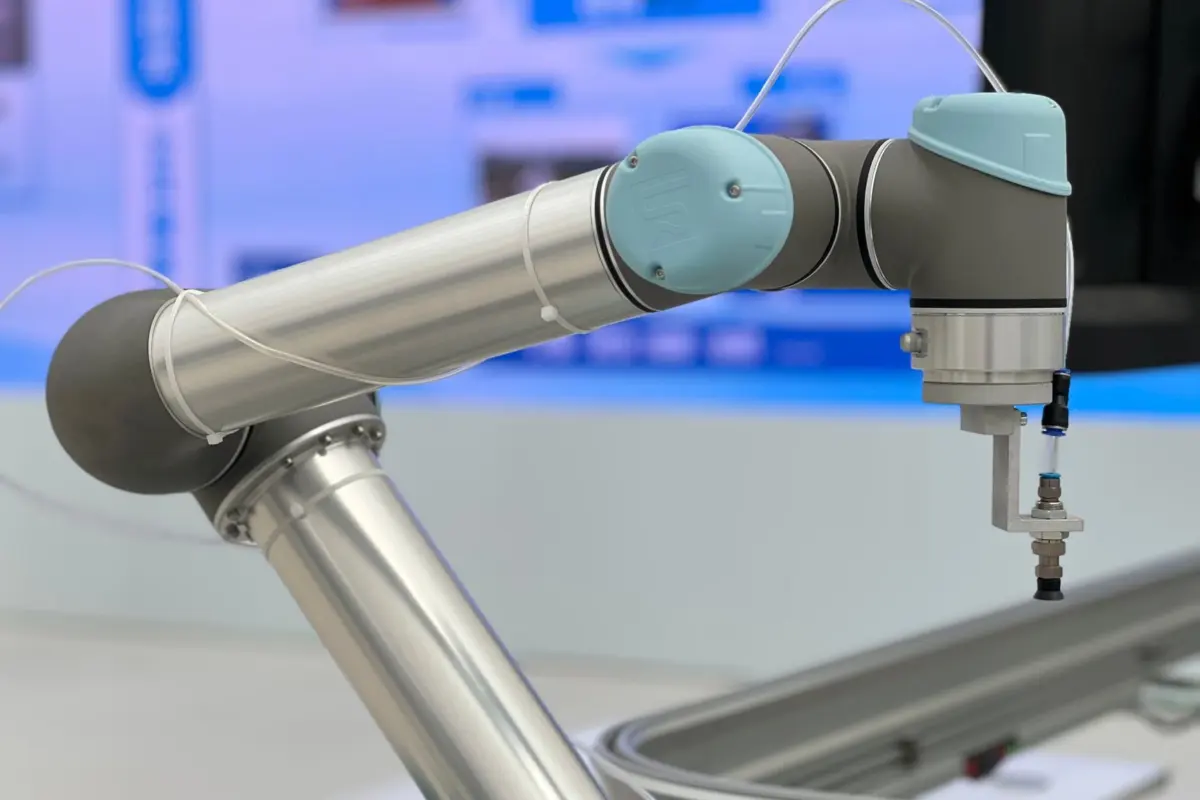
- Choose an electric generator when compressed air is scarce or costly to run to the cell. Electric palletizing grippers for cobots are listed with no compressed air requirement, and the adjustable VG10 adds dual gripping zones with configurable cups.
- Be cautious with foam pads on any air-driven setup, because foam pads are the case where high air volume is explicitly flagged.
- Let cycle time break ties. If a pump and an ejector both meet the holding requirement, the faster cycle and the higher automation level in your cell should decide.
How a vacuum gripper holds and releases a part
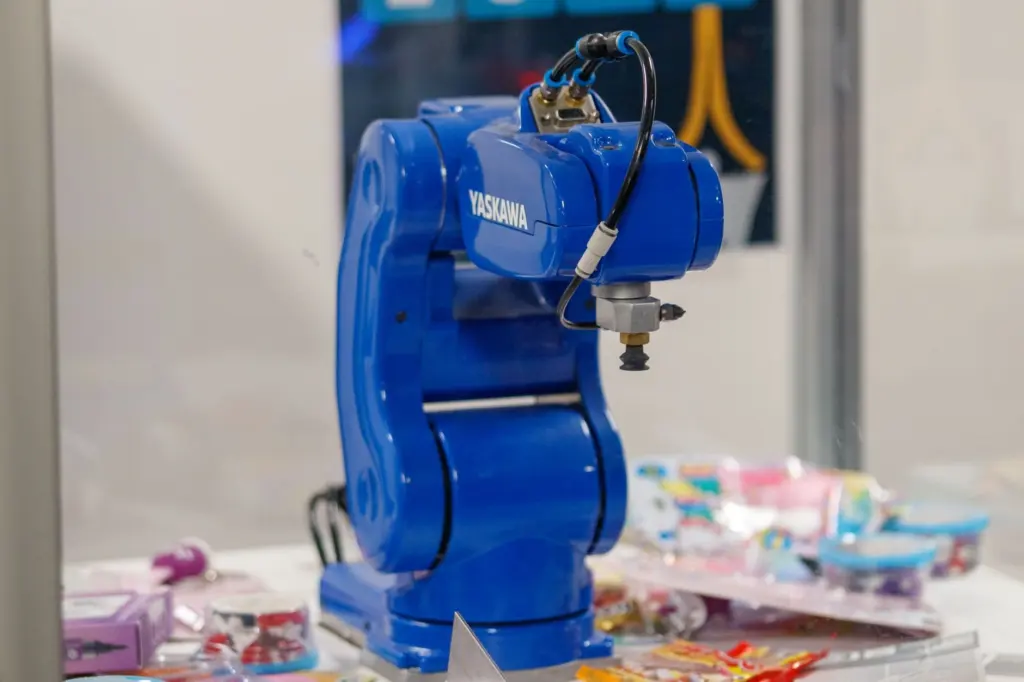
A vacuum gripper typically consists of suction cups, also called vacuum pads, a vacuum generator and control valves. When the generator creates a vacuum between the pad and the part, atmospheric pressure pushes the part toward the gripper. Closing and opening the valves holds and releases the part.
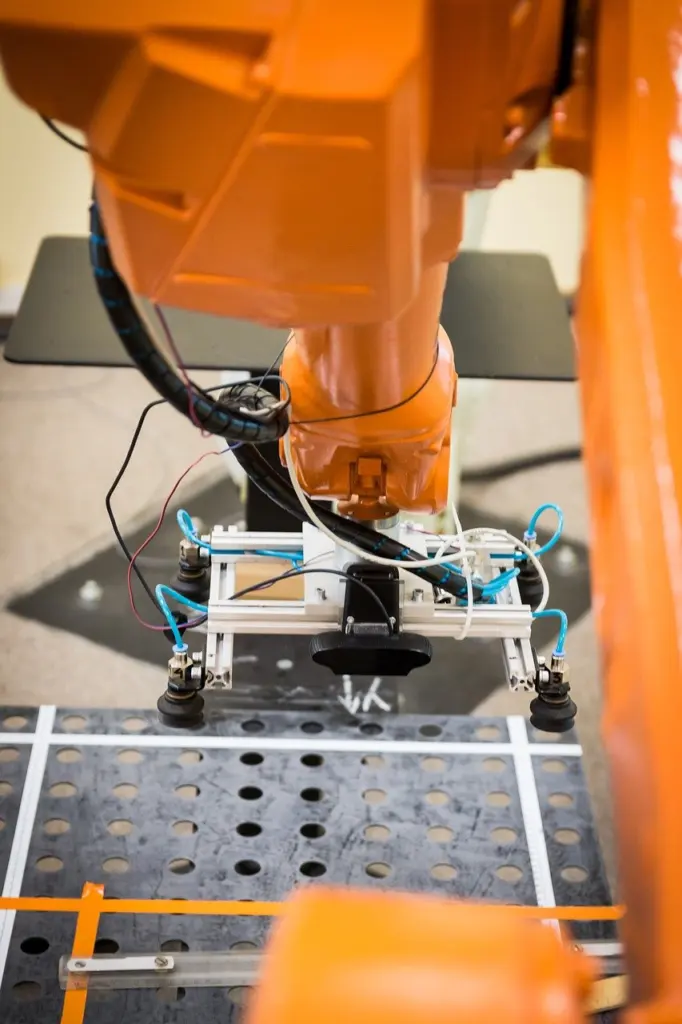
The simplest layout is a single suction cup on a vacuum source, which suits small lightweight parts. Larger or irregular-shaped workpieces use multiple cups arranged on a frame, which gives stability and an even load. Add part detection so the robot can track whether a part is present. Intelligent Integrators recommends it on any end-of-arm tool build.
Cup materials and pad types
Vacuum cups are commonly made of nitrile, silicone or polyurethane. Material choice is tied to the part’s temperature: choose foam or cup materials that can withstand the required temperature. Beyond that, match the pad family to the surface rather than to habit: cups for smooth rigid parts, foam for porous ones.
End effector choice and integration
In end-effector terms, grippers grasp objects while tools perform processing operations, and vacuum sits alongside mechanical and magnetic grippers as a gripper type. Electromate notes that grippers can be combined with different end-effectors to increase the number of jobs a cell can complete. If your cell must pick and also process, treat the vacuum gripper as one part of a wider end-effector design rather than the whole answer.
The same grasping question arises in humanlike machines; What Is Humanoid Robot Design? A Practical Guide To Building Human-Like Robots In 2026 covers how those designs approach it, and Inside The Humanoid Robot Company: How Today’s Firms Build, Fund, And Deploy Humanlike Robots (2026 Guide) looks at the firms building them.
Frequently asked questions
Which companies make vacuum grippers?
Well-known global brands include Schmalz, Piab, Pisco, Festo, SMC, Coval and VacMotion, according to a vacuum gripper overview. Use their datasheets for rated values.
Is a vacuum gripper the only kind of gripper?
No. Mechanical grippers with movable fingers and magnetic grippers are described alongside vacuum grippers as gripper types.
What does the adjustable VG10 gripper offer?
It is an electric vacuum gripper with dual gripping zones and configurable suction cups, listed for collaborative robot material handling.
Can a vacuum gripper lift cardboard?
Yes, with the right pad. Cardboard is porous, so foam pads are the better fit than standard cups.