Robotics camps for kids run from $395 for a half-day Robolabs week to $995 for a UW Innovation Lab session. Price follows hours, format and age track, so match the camp to your child’s grade first.
Families still deciding between a short camp and a standing weekly programme can compare both formats in Robotics Classes For Kids: A Parent’s Guide To Choosing The Best Program In 2026. The sections below follow a camp week from the first worksheet to the final robot, then turn that structure into decisions about cost, age track and safety.
How a robotics camp day works
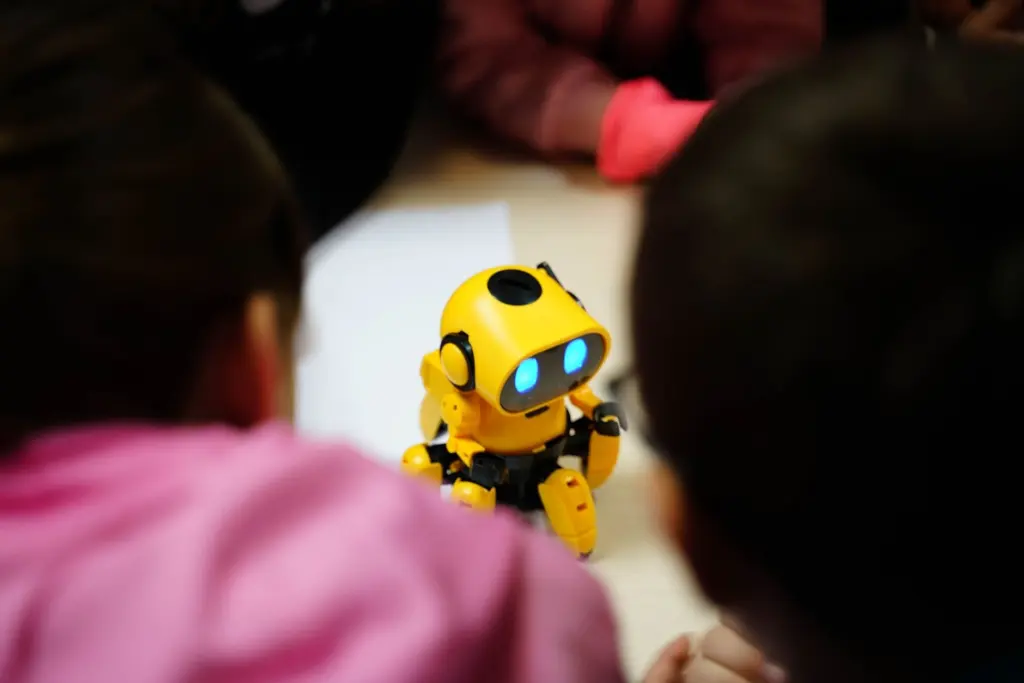
A robotics camp day alternates short instruction with long stretches of building, programming and testing. Providers describe the same core mix: iD Tech says a robotics camp combines fun and teamwork with kids and teens building and programming robots. This hands-on loop is how camps teach STEM skills, and it explains why the day is built around projects rather than lectures.
The published Robolabs schedule shows the typical order of a full day:
- Worksheet first. Campers begin with a short worksheet outlining the key concepts for the day.
- Build and program. They then build and program individual robot projects.
- Mid-session break. Each session includes one 10-minute break halfway through.
- Lunch. The full-day session runs 9:00 AM to 3:30 PM and includes a 30-minute lunch from 12:00 to 12:30 PM.
- Finish with a working robot. The week culminates in building a fully operable robot.
Challenges add pressure to that loop. According to iD Tech, programs typically include competitive challenges in which kids and teens task their robots with specific actions. A challenge round is where a child finds out whether the code and the build actually work together, which is the main reason to prefer a camp with a testing component over one that only demonstrates robots.
That daily structure is the same whatever the price tag, so the next question is what the different formats cost.
Camp formats and what they cost
Price depends mainly on hours and length. A half-day week is the cheapest summer format in the listings below, a full-day week costs more, and university-run sessions sit higher again.
| Format | Hours and days | Price | Planning use |
|---|---|---|---|
| Robolabs half-day week (2026) | 5 days, 9am–12pm or 12:30–3:30pm | $395 | Lowest-cost way to try robotics; pick a morning or afternoon slot. |
| Robolabs full-day week (2026) | 5 days, 9am–3:30pm | $695 | Covers most of a working day and allows longer build-and-test cycles. |
| Robolabs Thanksgiving camp (Nov 23–25, 2026) | 3 days, full day 9am–3:30pm; half day 9am–12pm or 12:30–3:30pm | $417 full day; $237 half day | A short school-holiday option when summer is past. |
| Robolabs Christmas camp (2026) | 4 days per week, full day 9am–3:30pm; half day AM or PM | $556 full day; $316 half day | Runs in the Dec 21–24 and Dec 28–31 weeks. |
| UW Innovation Lab, Jun 29–Jul 10, 2026 | Mon–Fri, 1–4 p.m. | $895 | University-run course for fourth and fifth graders. |
| UW Innovation Lab, Jul 27–Aug 7, 2026 | Mon–Fri, 1–4 p.m. | $995 | Later session of the same course at a higher listed price. |
Prices are the 2026 figures published on the Robolabs camps page and the UW Innovation Lab course page.
Two practical points follow from these listings. First, the UW course adds a nonrefundable $50 registration fee each quarter you register, so the course price is not the full cost. Second, the UW listing marks both sessions as closed, which shows that university-run options can fill up; check current availability before building plans around a date. The UW page also says participants should have a computer with a high-speed internet connection plus a headset and webcam, so read the course format closely before assuming your child will attend in person.
For a first camp, a half-day week is the lower-risk choice: it costs less, and a child who enjoys it can move to a full-day week or a longer track the following year. Choose full days when you need all-day cover or when your child is already building at home and wants more time on one project.
Matching age and track
Camps are organised by grade or age band, and the tools change with each band. The listings give a clear picture of what each age group can expect:
- Elementary and middle school at Robolabs. The Robolabs tracks serve students from elementary school through high school. VEX IQ focuses on foundational mechanical building, and FLL emphasizes programming and innovation using LEGO-based robotics.
- Middle and high school at Robolabs. The VRC track involves advanced robotics systems and metal builds for competition preparation, so it suits students who already want to compete.
- Ages 10–12 at iD Tech. The weeklong BattleBots Camp Junior uses VEX IQ Robotics and VEXcode IQ, per iD Tech. The same page’s course list shows that camp as ages 7–9, so confirm the age band on the booking page before you register.
- Ages 13–17 at iD Tech. The VEX Robotics Camp uses the VEX V5 Robot Kit, VEXcode V5 and C++, which makes it a text-coding step up from the block-style tools used for younger campers.
- Fourth and fifth graders at UW. The Innovation Lab robotics course is for that grade pair.
- Younger children on LEGO Mindstorms. NASA’s summer camp listing includes a provider offering Mindstorms/EV3 robotics for ages 5–14, in person and online in CA and TX.
Use the tool as your guide. LEGO-based or VEX IQ kits suit younger children who need quick results; VEX V5 with C++ or a VRC metal-build track suits teens who want depth and competition.
Choosing a camp and checking safety
Supervision is the safety factor with the clearest published number: Robolabs states a ratio of 8 students per instructor, according to its camp information. Ask every provider for its own ratio, because a lower ratio means more instructor time at each child’s robot, and that matters most for younger campers.
Beyond the ratio, put these questions to any camp before paying:
- Hardware and software. Which kit and coding tool will your child use, and are materials included in the fee?
- End product. Is there a finished robot, a demo or a showcase? Robolabs ends the week with a fully operable robot, which gives a child something concrete to show.
- Competitive or exploratory. Competitive challenges motivate some children and stress others. A child who likes open-ended building may prefer a creative track to one built around scoring.
- Logistics and welfare. Ask about drop-off and pick-up, first-aid arrangements, rules for tool and battery use, and how allergies or medication are handled.
Camps also vary in how much they add beyond robot building. iD Tech, for example, says its camps include AI, visual coding and machine learning, so check whether the topics on offer match what your child wants to learn.
Preparing your child and extending the learning
Preparation is light. Robolabs asks half-day campers to bring a snack and water bottle, and full-day campers to bring lunch as well. Label everything, and check your camp’s own list for anything else it requires.
Before the week starts, let your child tinker with building toys or a block-coding app so the first worksheet feels familiar. Afterwards, ask your child to explain how the final robot works; describing a design is a good test of understanding and a prompt for the next at-home project.
Robots in the home can also be a talking point once camp ends. Parents comparing household machines can browse the best robot vacuum picks in the consumer robots hub, and How Often Should You Run Your Robot Vacuum? Smart Schedules and Simple Rules for 2026 shows how a robot’s schedule can be set around a family routine.
Frequently asked questions
Does my child need robotics experience to attend?
Not at every camp. Robolabs states that no experience is necessary. Check the age and level labels of other providers to see whether they expect any background.
How young can a child start?
Robolabs camps begin at 1st grade, according to the Robolabs camps page. A Mindstorms/EV3 offering in NASA’s listing starts at age 5, so younger children have options if you look for LEGO-based providers.
Are there camps outside the summer?
Yes. Robolabs lists a Thanksgiving camp on Nov 23–25, 2026 and Christmas camps in the Dec 21–24 and Dec 28–31 weeks, each with full-day and half-day options.
Do robotics camps cover AI?
Some do. iD Tech says campers learn AI, visual coding and machine learning alongside building robots.