A spec sheet lists LiDAR and radar as distance sensors, and both look suitable. The difference between LiDAR and radar is the medium: LiDAR times laser pulses to map shape finely, while radio-wave radar reaches further and copes better with weather.
If you are choosing sensors while working out how to build a robot, the useful question is not which sensor is better. It is which failure your machine can least afford. The sections below take the most common misunderstandings in turn and turn each into a practical decision.
The core difference: light versus radio waves
LiDAR stands for light detection and ranging. It is a remote sensing method that sends out pulsed laser light and calculates distance through time-of-flight measurements, meaning the time the reflected light takes to return to the sensor. Many short pulses together form a point cloud, a set of measured positions that outlines the surfaces around the sensor. Radar stands for radio detection and ranging. It is the older technology and works by sending radio waves from a transmitter and antenna and reading what comes back.
The wavelengths explain most of the practical differences. LiDAR lasers typically sit between 600 and 1000 nm or at 1550 nm, with 1550 nm used for long-range imaging. Radar wavelengths run from 30 cm down to 3 mm, so each radar wave is vastly longer than a laser pulse. Short pulses give LiDAR its fine detail, and radio waves give radar its toughness and distance.
| Attribute | LiDAR | Radar | Planning use |
|---|---|---|---|
| Signal | Pulsed laser light | Radio waves from a transmitter and antenna | The medium decides what can block or scatter the signal. |
| Wavelength | 600-1000 nm or 1550 nm | 30 cm to 3 mm | Shorter wavelengths resolve smaller objects. |
| Output | Point cloud built from many short pulses | Detections with velocity via the Doppler effect | Pick the data type your software already handles. |
| Position and distance accuracy | Maps positions and distances more accurately | Less accurate mapping | Precise mapping and small obstacles favour LiDAR. |
| Operating distance | Shorter than radar | Longer; some systems detect objects up to a mile away | Long approach distances favour radar. |
| Bad weather | Does not work well in snowstorms, rain or fog | Less affected by bad weather | Outdoor machines need radar or a fallback. |
| Cost | High-end automotive systems around $75,000 | Vehicle systems from a few hundred dollars | Budget often settles volume deployments. |
These comparisons draw on AZoOptics and Fenstermaker’s comparison of the two technologies.
For the pulse timing, scanning and processing behind the LiDAR column, How LiDAR Really Works: A Practical Guide To 3D Sensing In 2026 goes into more depth.
Misconception: radar and LiDAR differ only in price
Price is the most visible difference but not the deepest one. The two sensors measure the world in different ways, so they fail in different ways. A cheaper radar cannot stand in for a LiDAR when your robot has to tell a table leg from a cable, and an expensive LiDAR cannot stand in for radar when the robot works outdoors in rain.
Treat the choice as a match between the sensor’s strengths and your robot’s operating conditions. Cost enters only after you have identified which sensing job is non-negotiable.
Resolution and object detail
LiDAR is the sharper sensor. It can map positions and distances much more accurately than radar, and it detects smaller objects because its pulses are short compared with radar’s longer wavelengths. Radar, in contrast, can interpret small objects as bigger than they really are.
For a robot this has direct consequences:
- Narrow gaps and small obstacles: a radar return that overstates an object’s size can make a passable gap look blocked, so LiDAR suits tight indoor navigation.
- Mapping and shape recognition: the point cloud gives the software surfaces to work with, which is what makes LiDAR the usual choice for building maps of a space.
- Large moving objects: radar is often the better option for detecting larger objects in motion, which is why its lower detail is rarely a handicap for vehicles and similar targets.
Higher resolution is therefore an advantage only when the task needs fine geometry. If your machine only needs to know that something large is approaching, extra detail adds nothing to that decision.
Weather and lighting
Radar is the steadier sensor when conditions turn bad, but the evidence supports a comparison, not immunity. During snowstorms, rain or fog, LiDAR does not work well, while radar systems are not affected quite as much. LiDAR is also described as limited at night as well as in bad weather, whereas radar is not sensitive to different environments. The same source attributes radar’s robustness to its use of radio waves and to having no mechanical parts.
- Outdoor machines: a robot that must keep sensing in rain, fog or snow should not rely on LiDAR alone. Radar gives it a signal that degrades more gently.
- Indoor machines: a robot that stays under cover avoids the weather conditions where LiDAR weakens, so the LiDAR advantage in detail usually matters more.
- Mixed environments: a robot that moves between sheltered and exposed areas is the clearest candidate for carrying both sensors.
The practical rule is to decide by the worst weather your machine is expected to work in, not by the average day.
Range is a property of the model, not the technology
Radar has the longer operating distance as a type, and some radar can detect objects up to a mile away. That is a ceiling for particular systems, not a figure to expect from a compact module, and the range overlaps heavily at short distances.
Product examples from Benchmark Magazine show how modest practical ranges can be:
- Compact radar: the AXIS D2050-VE has a maximum sensing range of 50 m and a 120 degree horizontal field of view.
- Time-of-flight sensor: the SICK Visionary-T DT operates from 0.5 to 60 m, with a sensing area of up to 50 x 45 m at 40 m range.
- Laser scanner: the OPTEX RLS-3060-SH extends detection from a 30 m radius to a 50 m radius.
A compact radar and a laser-based sensor can therefore cover similar distances at the scale of a building or yard. Compare the specific datasheet figures for the model you intend to buy, and state the conditions they apply to, rather than assuming the sensor type fixes the range. Beyond the ranges quoted for these models, long approach distances such as fast vehicles are where radar’s advantage becomes decisive.
Motion and reaction time
Radar measures speed directly. It uses the Doppler effect, measuring the scattering of the radiation, to find how fast a target is moving. The same source notes that radar has a fast reaction time and is used in autonomous vehicles alongside LiDAR. For a robot that must react to moving people or vehicles, that direct velocity reading is a clear reason to include radar even when LiDAR supplies the map.
Cost without the headline numbers misleading you
Radar is a much cheaper option than LiDAR. Fenstermaker reports that radar systems for vehicles can be found for as little as a few hundred dollars, while a high-end automotive LiDAR system can cost around $75,000.
Those two figures mark the ends of the automotive market: a low entry price for radar and a high-end ceiling for LiDAR. They are not typical prices for a hobby or warehouse robot, so use them to understand the gap between the two technologies, then price the actual models you are considering.
Choosing for a robot or autonomous machine
Start from the failure you cannot accept, then pick the sensor that avoids it.
- Choose LiDAR when the machine needs accurate positions and distances, must detect small objects, or must build a map from a point cloud. It suits sheltered environments best.
- Choose radar when the machine must detect larger moving objects, read their speed, or keep working in rain, fog or snow. It also suits tighter budgets.
- Choose both when the robot works in mixed conditions or in places where a missed detection is costly. This is sensor fusion, where each sensor covers the other’s weaknesses.
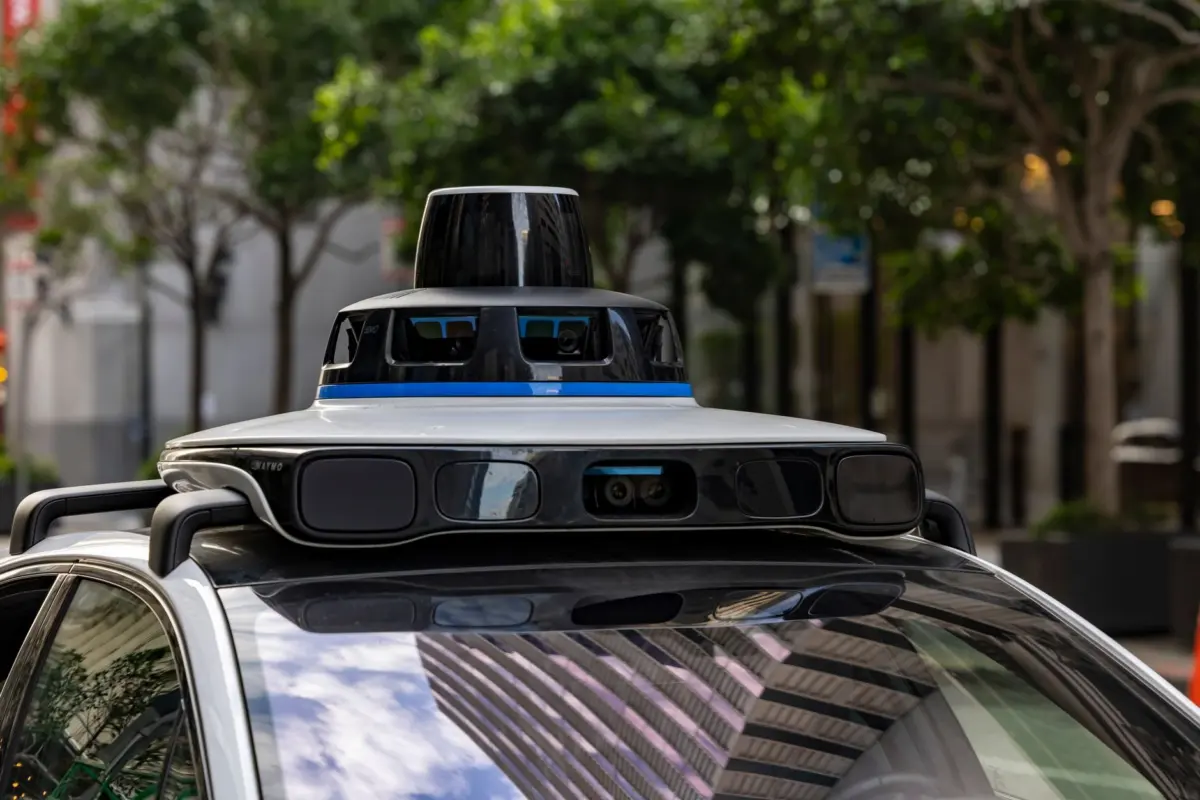
Autonomous vehicles already follow this approach, using radar alongside LiDAR. On mobile platforms, LiDAR sensors can be mounted on a moving platform, with GPS and an inertial measurement unit (IMU) supplying the positioning, so budget for those extras when the sensor is on a moving robot.
If your project is a fixed manipulator rather than a mobile platform, the sensing questions differ, and the build steps in How To Make A Robot Arm: A Practical Step-By-Step Guide For Beginners (2026) are a better starting point.
Frequently asked questions
| Question | Answer |
|---|---|
| Which works better in rain or fog? | Radar. LiDAR struggles in rain, fog and snowstorms, while radar is affected less by bad weather. |
| Which has better resolution? | LiDAR. It maps positions and distances more accurately and picks out smaller objects, whereas radar can make small objects look larger. |
| Can they be used together? | Yes. Autonomous vehicles use radar alongside LiDAR, combining radar’s fast reaction time with LiDAR’s detailed point cloud through sensor fusion. |
| Which is cheaper? | Radar. Vehicle radar systems start at a few hundred dollars, while high-end automotive LiDAR can reach around $75,000. |