
A wire free robot lawn mower replaces the buried perimeter wire with satellite positioning, cameras and an app-drawn virtual boundary. It works best with open sky above the lawn, and costs more than a wired mower.
This guide covers the lawn side of home robotics. For indoor machines, including how to pick the best robot vacuum, start from the consumer robots hub.
How wire-free mowers find their way
A wire-free mower swaps the physical boundary for a position fix, a stored map and obstacle sensors. The usual sequence runs as follows.
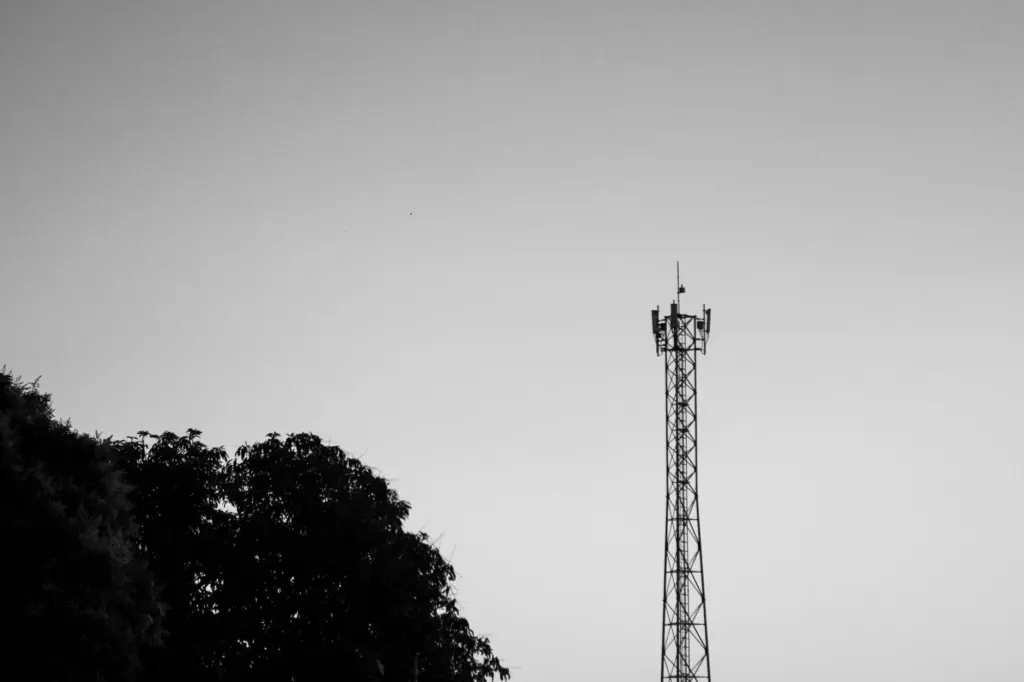
- Reference station: an RTK base station sits at a fixed location with known coordinates. It compares its actual position with the position the satellites report, which gives it an error it can pass on, as described in Anthbot’s RTK guide.
- Corrected position: RTK is high-precision positioning that improves standard GPS using real-time correction data from that reference station. The mower applies the corrections to its own satellite fix.
- Boundary mapping: after RTK mapping, the user sets virtual boundaries through a mobile app. These boundaries do the job the wire used to do.
- Obstacle sensing: combinations of ultrasonic sensors, bump sensors and cameras let the mower detect and steer around objects, according to Sunseeker’s explainer.
Many current mowers combine these layers rather than relying on one. Mammotion describes its LUBA 2 AWD as pairing UltraSense AI Vision with RTK, so that navigation and obstacle avoidance work without perimeter wires. Satellite positioning handles where the mower is on the lawn, and cameras handle what is directly in front of it.
Navigation methods compared
The method a mower uses decides where it performs well and where it struggles. The table sets the main options side by side, including the wired baseline they replace.
| Method | How it works | Strength | Limit | Planning use |
|---|---|---|---|---|
| Boundary wire | Physical wire defines the mowing area | Reliable and affordable | Needs installation and maintenance | Baseline to compare against |
| RTK GPS | Satellite fix refined by a reference station | Approx. 2–3 cm positioning accuracy on an open lawn; best efficiency on large open areas | Accuracy may drop 20–50% under dense canopy; signal quality typically drops 30–70% in heavily obstructed environments | Suits wide, open lawns with a clear sky view |
| Vision AI | AI cameras identify boundaries and obstacles | Wire-free without relying on a satellite fix alone | Can be affected by lighting and weather conditions | Check how it handles your lawn edges at dusk and in rain |
| LiDAR | Mapping sensor used by some models | Approx. 2–5 cm mapping accuracy | Model-specific | Navimow’s i208, i215 and i220 LiDAR models are listed with mowing areas in the model table below |
| Network RTK (Navimow) | Correction data delivered over the network | No local antenna; connects via the Navimow app | Availability depends on your area | Removes the base-station step where it is available |
Figures come from Anthbot’s buying guide and the Segway Navimow setup guide.
The practical reading is that RTK suits large open lawns, vision suits yards where cameras can see clear edges, and a combination covers more situations than either alone. A mower that pairs RTK with cameras gives itself separate ways to read the lawn, so one weak signal does not strand it.
Accuracy and limits
How accurate RTK mowing is
RTK is the main reason wire-free mowing became practical. Anthbot’s guide says RTK reduces positioning errors from several meters to a few centimeters, which is what allows accurate mowing without perimeter wires. Among manufacturer figures, ECHO states that its robot navigates with an accuracy of around 1 inch. That is a manufacturer claim for a clear-sky setup, so read it as a best case rather than a guarantee for every corner of a yard.
Compared with a wired mower, edges can still look different. Sunseeker describes wire-free edge precision as slightly variable, with RTK and Vision AI narrowing the gap.
Tree cover, buildings and weather
Satellite signal is the weak point. Anthbot reports that signal quality typically drops by 30–70% in heavily obstructed environments, and that accuracy may drop by 20–50% under dense canopy because of GNSS blockage. A lawn that sits mostly under mature trees is the clearest case for choosing a wired mower instead, or for demanding a camera-assisted model, since a wire does not depend on the sky.
Vision has its own conditions. Anthbot notes that camera systems can be affected by lighting and weather, and Sunseeker adds that they may need clearer visual boundaries. A lawn with indistinct edges, deep shade or heavy glare is therefore a harder fit for a vision-led mower.
Slope, size and footprint
Terrain and machine size are model-specific limits. Mammotion’s own comparison lists the LUBA 2 AWD’s premium pricing and notes that its large physical footprint may not suit smaller lawns. Slope ratings differ noticeably between brands, so the model table below gives the manufacturer figures side by side.
Wire-free versus wired
Cost is the clearest trade-off. Sunseeker puts wire-free mowers at €1,500–€3,000, against €800–€1,800 for wired models, and says the most reliable wire-free systems begin around €1,600. In return, a wire-free mower avoids the installation and maintenance that Anthbot says the boundary wire requires.
A wired mower remains sensible for a budget-led purchase on a lawn with heavy overhead cover. A wire-free model earns its premium on open lawns, where RTK works at its best.
Model comparison by area and slope
The models below show how manufacturers express capacity. Navimow quotes mowing area per charge, while Mammotion quotes coverage by model size, so the area columns are not interchangeable.
| Model | Mowing area | Stated fit or slope | Planning use |
|---|---|---|---|
| Navimow i205 | 125 m² per charge | Recommended for 500–1000 m² lawns | Smaller, simpler lawns |
| Navimow i208 AWD | 250 m² per charge | Recommended for 500–1000 m² lawns | Same lawn size as the i205 with all-wheel drive |
| Navimow i208 / i215 / i220 LiDAR | 265 / 426 / 560 m² per charge | Step up in the order listed | Pick by lawn size within the LiDAR line |
| Navimow steep-slope model | Recommended for 2000–5000 m² lawns | Steep slope 84% (40°); serious hills, uneven ground or exposed roots | Large, hilly or root-heavy lawns |
| Mammotion LUBA 2 AWD | 0.75, 1.25 or 2.5 acres by model | Slopes up to 80% (approximately 38.6 degrees); from $2,499 (0.75 acre) to $4,399 (2.5 acre) | Large lawns where the footprint and price are acceptable |
Specifications are taken from the Segway Navimow guide and Mammotion’s GPS mower page.
For very large properties, ECHO lists its TM-1050 for mowing up to 10 acres, while Navimow quotes its per-charge area in m².
Choosing a wire-free mower
Start with the lawn, not the feature list. These checks narrow the field quickly.
- Lawn size: compare your lawn with the rated area, and check whether the figure is per charge or total coverage. A mower sized well below your lawn will struggle to finish a pass.
- Slope and weather: Sunseeker suggests a residential model with all-wheel drive, at least 30% (17°) slope handling and IPX5 waterproofing. Treat that as a minimum for uneven or wet lawns, not a target.
- Sky view: an open lawn suits RTK. If trees cover much of the lawn, favour a camera-assisted model or a wired mower.
- RTK access: Navimow says Network RTK is included at no extra cost, and you can check availability by postcode before buying.
- Footprint and price: a large machine suits a large lawn, and Mammotion’s own comparison flags that the LUBA 2 AWD may not suit smaller ones.
More home robotics
A wire-free mower is one part of a wider set of home machines. For a very different kind of helper, see AI Desk Robot: Transform Your Workspace With Smarter Assistance In 2026. For indoor floors, The Thinnest Robot Vacuum in 2026: Slim Picks That Actually Clean Under Furniture covers low clearances. More guides sit under consumer technology.
Frequently asked questions
Can one RTK base station serve more than one mower?
Yes, according to ECHO, a single 4G GPS-RTK base can cover a 5-mile radius and communicate with an unlimited number of robots. Check your own brand, since other systems may differ. See ECHO’s product knowledge page.
What does setup involve?
Wire-free mowers typically need just a quick base station placement and a walk around your property, as Sunseeker explains. There is no wire to lay or maintain.
Are wire-free edges as neat as wired ones?
Not always. Edge precision can be slightly variable compared with wired mowers, although RTK and Vision AI are narrowing the gap. Mowers rely on the quality of the satellite signal and camera view along the edges.