| Factor | Stepper motor | Servo motor | Planning use |
|---|---|---|---|
| Control loop | Open loop | Closed loop, with resolver or encoder feedback | Decide first whether the joint needs the controller to confirm where it is. |
| Torque as speed rises | Torque decreases as speed increases and approaches zero at high speed | Consistent torque across the speed range | Keep steppers on joints that move slowly; give fast joints to servos. |
| Standstill behaviour | Full torque at standstill while the windings are energized | Consumes more power at zero speed | A joint that mostly holds a pose costs less to hold with a stepper. |
| Position resolution | 1.8° per step, 200 steps per full rotation; microstepping adds steps per turn | Resolution depends on the feedback device | Check the step angle and driver microstepping against the accuracy your joint needs. |
| Speed fit | Low speed, high accuracy | Recommended for high speed, typically more than 2,000 RPM | Use your joint’s top speed to rule one option out early. |
| Cost | Generally less expensive than a comparable servo | Generally more expensive than a comparable stepper | Budget for the whole motion system, not only the motor. |
| Control effort | Simple control | More complex control, tuning required | Allow commissioning time if you choose a servo. |
Figures and qualitative comparisons come from the AMCI stepper vs servo tutorial and, for the speed threshold, an Automation Forum discussion.
Stepper motor vs servo motor mostly comes down to feedback: a stepper runs open loop and suits simple, low-speed, cost-sensitive joints, while a servo runs closed loop and suits high-speed, dynamic or force-controlled motion, at higher cost and with tuning.
If you are still selecting parts for a project, how to build a robot shows where the motor decision sits in the wider build, and our engineering section covers neighbouring design choices.
Choosing by what the joint has to do
Neither motor is better in general; the better one is the one whose weakness your joint never exercises. AMCI lists the conditions under which each type earns its place, and they translate directly into joint decisions.
- Pick a stepper when the joint needs high torque at low speed, simple control, or high accuracy at low speed. A slow rotary base or a linear axis fits this description. Steppers are also commonly recommended for applications that are cost-sensitive and low maintenance, which suits a prototype or a one-off build.
- Pick a servo when the joint needs high speed, dynamic motion profiles, or a controlled applied force. A fast arm joint or a gripper that must not crush its payload belongs here.
- Split the robot when joints differ. Nothing forces one motor type across every axis, so a slow positioning axis can use a stepper while a fast or force-sensitive axis uses a servo.
- Use the speed number as a screen. Servos are recommended for high speed, typically more than 2,000 RPM. If the joint output never gets near that range, the speed argument for a servo is weak, and other reasons such as force control must justify it.
Torque behaviour across the speed range is usually what settles borderline cases, so it comes next.
Torque and speed on a moving joint
A stepper loses torque as the joint speeds up, while a servo keeps delivering it. AMCI states that torque decreases as speed increases on a stepper and that, at high speeds, stepper torque approaches zero while a servo provides consistent torque. A stepper chosen for its strong low-speed holding can therefore disappoint once you ask the same joint to move quickly.
Standstill is where the picture reverses. Stepper motors can provide full torque at standstill while the windings are energized, and servos consume more power at zero speed. For an arm that spends long periods holding a pose, that difference shows up in power draw.
Handling load variation
Servos can provide peak torque for brief moments to overcome variations in load. They can also control motor torque through precise monitoring of the current supplied, so torque does not exceed a set value. That makes a servo the safer match for a joint that meets unpredictable resistance, such as a gripper closing on an object, because the limit can be set rather than discovered by damage.
Precision and positioning
Which is more precise depends on what you mean by precise. A stepper offers fine, fixed increments, while a servo adds confirmation that the move actually happened.
Stepper resolution
On a stepper with a step angle of 1.8°, 200 steps are required for a full rotation, and microstepping increases the number of steps per turn. AMCI lists low speed with high accuracy among the conditions where a stepper fits. The catch is that open loop means the system has no feedback on position, so its accuracy rests on the motor staying within its specifications. An overloaded stepper gives the controller no way to find out.
Servo feedback
A servo closes that gap. Its feedback device, a resolver or an encoder, reports what the shaft is doing, and AMCI notes that this feedback is also required for proper current control. For a joint where a wrong position is costly, feedback is the real precision advantage, more than any step count.
The practical rule: choose a stepper when moves are slow and you can size the motor with margin, and choose a servo when the joint must report and correct its own position.
Cost and integration effort
A stepper is generally less expensive than a comparable servo, and AMCI gives the reasons. Steppers typically do not require feedback, use less expensive magnets, and rarely incorporate gearboxes. Servo motors require feedback, use more expensive magnets, and often incorporate gearboxes. The extra cost therefore comes from the whole system, so compare complete quotes including the motor driver and any feedback device rather than motor prices alone.
Servos also cost engineering time. Their control is more complex and tuning is required, whereas stepper control is simple. For a hobby or student project with a tight schedule, that tuning effort can matter as much as the hardware price. If you are weighing how much control-system work you want to take on, the trade-offs also feature in Mechatronics Vs Mechanical Engineering: Which Degree Is Right For You In 2026?, and motion systems on flying platforms raise different concerns, covered in How Drones Work: The Clear, Practical Guide To Flight, Systems, And Safety (2026).
How each system works
The differences above follow from construction and control, as described by AMCI.
Stepper motor and its driver
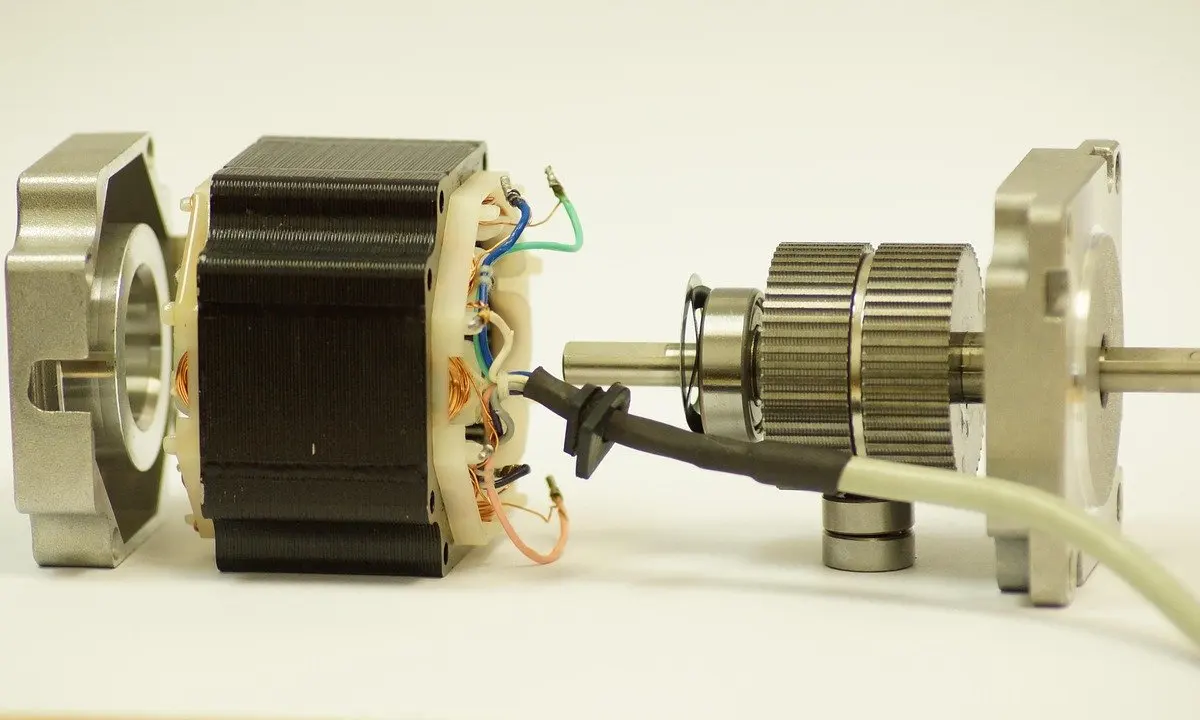
Most industrial stepper motors are hybrid steppers, with a permanent magnet rotor and a wound electromagnetic stator. The motor driver supplies current that creates a magnetic field, and the controller commands the motor in discrete steps. Because the loop is open, the driver does not receive position information back from the shaft.
Servo motor, encoder and drive
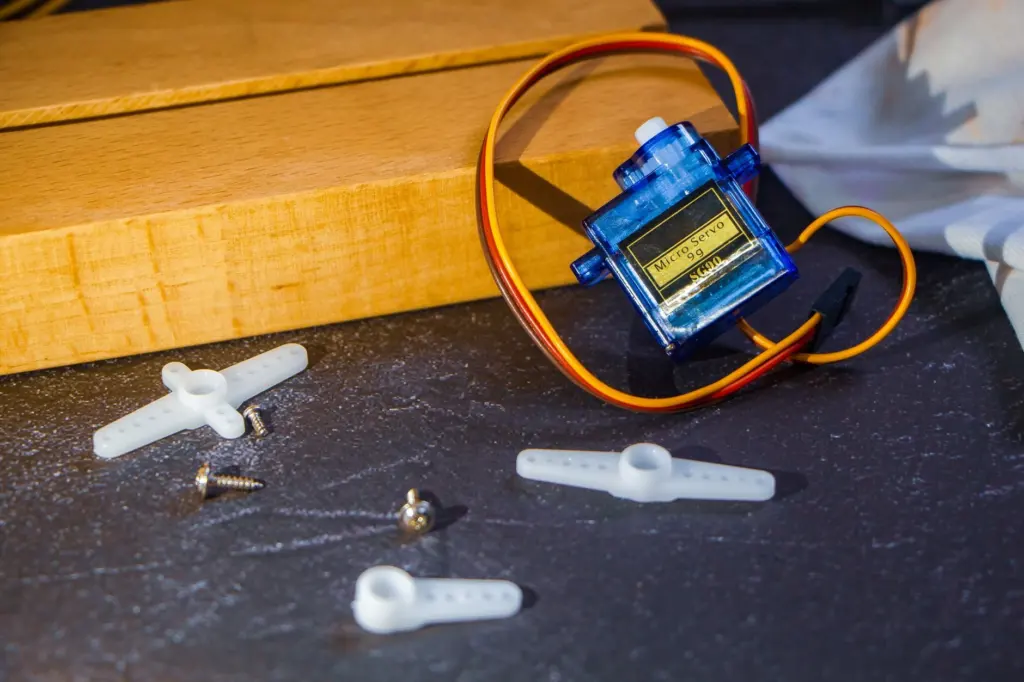
An AC servo consists of a three phase stator and a permanent magnet rotor. The drive uses the encoder or resolver signal to regulate current and, through it, position and torque. Servo control is therefore closed loop by design, which is why the feedback device is not optional.
Frequently asked questions
Do I need an encoder on a stepper motor?
Not necessarily. A stepper can run in open or closed circuit configurations, and if it is operated within its specifications, no encoder is needed. A servo, by contrast, always needs feedback.
How does the motor driver change torque?
On both types, increasing the current increases motor torque. The driver sets that current, so the driver and motor must be chosen as a pair.
Do servos have the vibration problems of steppers?
A servo does not create the vibration and resonance problems that stepper motors can. The trade-off reported alongside this is that servos need more maintenance.
Which option suits a low-maintenance build?
Steppers are commonly recommended for applications that are cost-sensitive and low maintenance, so they are the usual starting point for a simple prototype.