
Is a robot AI? Not by default. A robot is a physical machine, while AI is the reasoning layer that can be added to it. Many robots run engineered programs, and only some use AI to perceive, decide and adapt.
This page separates the hardware from the software intelligence so you can judge any specific machine. For the applied side, the wider guide explains how is ai used in robotics across real systems.
Where the line between robot and AI sits
One AI-in-robotics explainer puts it plainly: a robot is metal and motors, and AI is the reasoning layer. That shorthand is useful, but it is not a perfect split. As an engineering comparison of AI and robotics notes, the distinction is not simply software versus hardware, or thinking versus doing. A robot runs software too. The real question is what kind of software sits between its sensors and its motors.
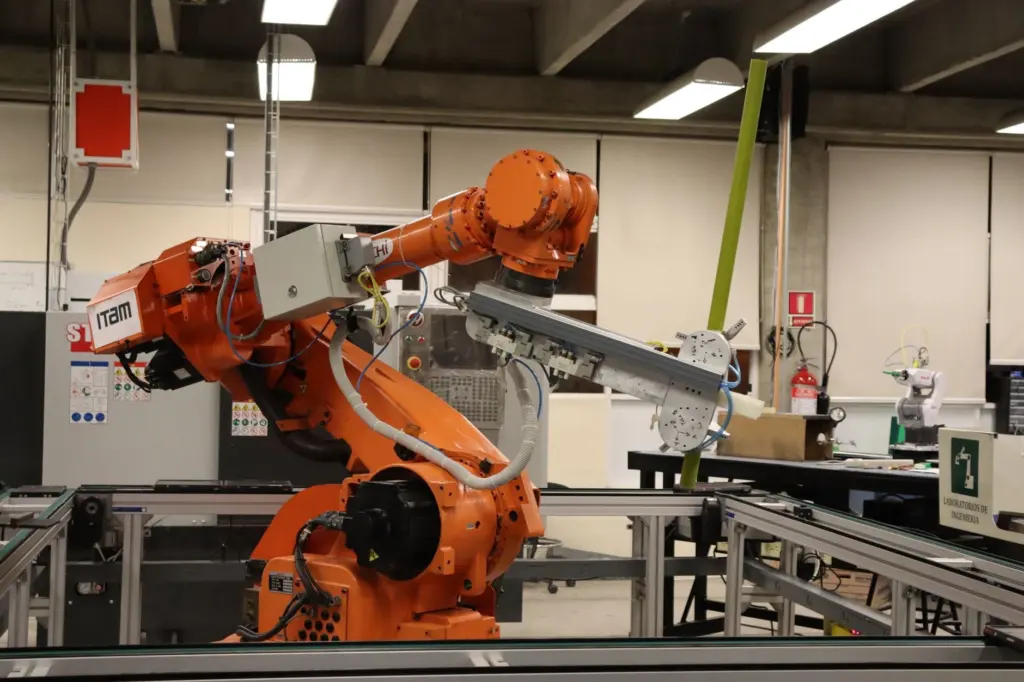
Robotics covers the design and operation of physical robots: mechanics, sensing, planning and control. AI covers computational capabilities such as inference, perception, reasoning and learning. The two fields overlap, but each can exist without the other.
| Attribute | Robot | AI | Planning use |
|---|---|---|---|
| Scope | Mechanics, sensing, planning and control of a physical machine | Inference, perception, reasoning and learning | Check which capability a product claims, not just that it moves. |
| Typical behaviour | Executes preprogrammed or semi-autonomous tasks | Learns from experience, adjusts behaviour and handles novel situations | Look for adaptation to new conditions as the sign of intelligence. |
| Can it exist alone? | Yes, it can follow a carefully engineered program without a learned model | Yes, it can classify documents without controlling a robotic body | Neither term implies the other, so ask about both. |
The scope and independence points come from the OpenELAB comparison, and the behaviour contrast comes from Tech Times.
How a robot goes from sensing to acting
Every AI robot has three layers, and the order matters because AI only occupies the middle one. A robot with no AI still has the first and last layers.
- Sensors take in the world. Sensors are how the robot knows anything is happening at all, so they supply the raw input for everything else.
- A model or program decides. This is the layer where AI may or may not appear. It can be an engineered program or a learned model.
- Actuators move. The motors and joints carry out whatever the decision layer chooses.
This layered description comes from the Amquest Education explainer. The practical consequence is that you judge a robot’s intelligence by the middle layer, not by the sensors or the arm. A well-built arm with many sensors can still be driven by a fixed program.
Robots that work without AI
Yes, a robot can work without AI. Robotics involves physical machines executing preprogrammed or semi-autonomous tasks, and a robot can follow a carefully engineered program without a learned model. Factory robots are the usual example: robotic operators in factories optimize processes and perform simple procedures.
Preprogrammed does not mean blind. A preprogrammed arm can use feedback to correct joint motion and check whether an operation has completed. That is a sensor and a control loop at work, and it can respond to a condition without any learning. So sensing on its own is weak evidence of AI.
For repetitive, well-defined work, this is a sensible design. The program does the same thing each time, and you do not need a model that adapts. AI starts to earn its place when the machine must face variation it was not explicitly programmed for.
Where AI enters the loop
AI turns a repeat-motion machine into something that reads its surroundings and decides what to do next. Research on the AI robot market describes this as enabling mechanical systems to perceive their environments, learn from real-time data and adapt to unpredictable scenarios, with machine learning combined with sensor fusion used to optimize workflows.
Computer vision
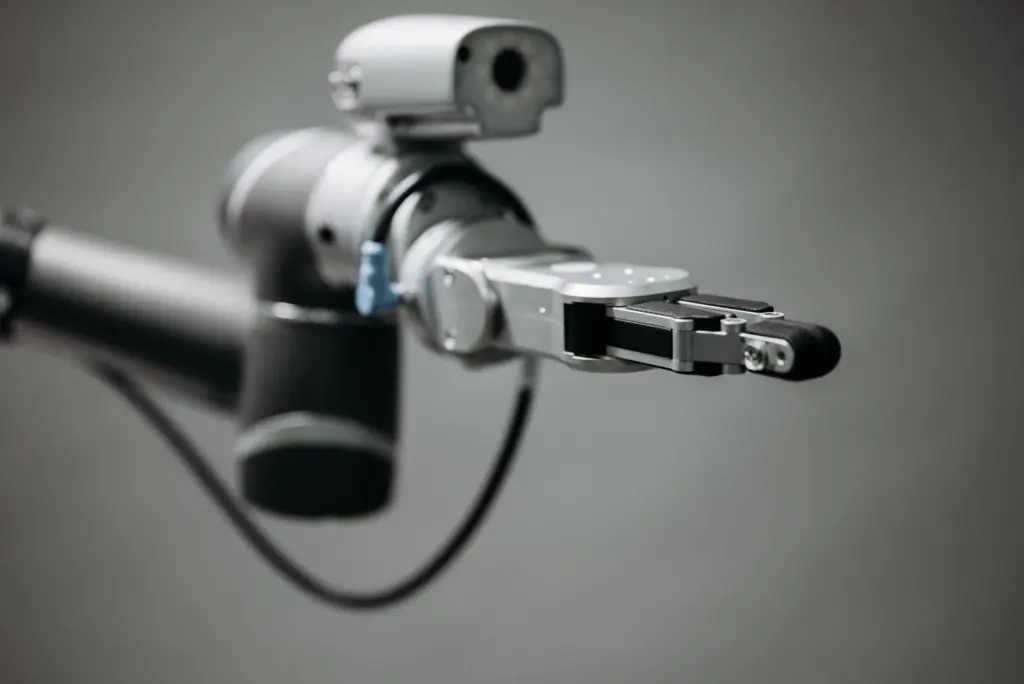
Computer vision is the most visible example. Vision models let robots see, identify objects, read labels, spot defects and navigate without bumping into things. A camera by itself only collects images; the vision model is what turns them into decisions.
Machine learning
Machine learning is what lets a robot get better without someone rewriting its code. It has two distinct phases. Training adjusts the model using data and an objective, and inference uses the resulting model to process new inputs. If you want to see how learning-based methods differ from newer generative tools, read Machine Learning vs Generative AI: What’s Different and When to Use Each in 2026.
AI is also a broader field than learning alone. Some planning and reasoning techniques fall under broad definitions of AI even when they use no machine learning. For the longer story of how these methods developed, see The History Of Artificial Intelligence: A Concise Timeline From The 1940s To 2026.
Autonomy is not the same as AI
Autonomy describes a robot acting on its own. AI is one way to get there. One definition of an AI robot is any physical machine using at least one AI method to make decisions on its own, which ties the two ideas together without making them identical.
The difference shows up in how they handle change. Intelligence, as in AI, involves learning from experience, adjusting behavior and handling novel situations. A fixed-automation robot repeats what it was told. An AI-enabled one can adjust. A robot can be partly autonomous through engineered logic and feedback, so autonomy alone does not prove AI is present.
How to tell whether a robot uses AI
Start with behaviour, because it is easier to observe than the internals. Then check the specifications for named techniques.
- Does it adapt to new situations? Learning from experience and handling novel situations are signs of AI. Repeating the same motion every time is not.
- Does it read its surroundings and choose? Identifying objects, reading labels or spotting defects points to a vision model.
- Does it improve without a code rewrite? That points to machine learning rather than an engineered program.
- Is sensing the only evidence? Treat it as inconclusive. A preprogrammed arm can use feedback without any learned model.
Be careful with the reverse test. Finding no machine learning does not settle the matter, because planning and reasoning techniques can count as AI without it. When a specification is vague, ask what the decision layer actually is: an engineered program, a learned model, or a planning method.
Choosing between a programmed robot and an AI robot
Choose a programmed robot when the task is simple, repeated and stable. Choose an AI-enabled robot when the machine must perceive and adapt to conditions that change. The evidence supports that split: engineered programs suit simple procedures, while AI suits unpredictable scenarios.
One more point protects you from overestimating AI. Even in an AI robot, the model’s output is not the final word. Application code decides whether to accept the result, request review, or send a command. The intelligence is a component inside a controlled system, not the whole machine.
Frequently asked questions
Can AI exist without a robot?
Yes. AI can operate entirely in virtual environments, performing data analysis, predictions or simulations without any mechanical counterpart, and an AI application can classify documents without controlling a robotic body.
What is the difference between training and inference?
Training adjusts the model using data and an objective. Inference uses the resulting model to process new inputs, which is what a robot does when it is working.
Who makes the final decision in an AI robot?
The model produces a result, and application code decides whether to accept it, request review or send a command to the robot.