Asked when AI was invented, most people want one date, but the history of artificial intelligence timeline has more than one anchor: Turing’s 1950 test proposal and the 1956 Dartmouth workshop that formally launched the field.
The dates below are tied to what each era meant for machines that move and sense. For present-day applications, the AI in Robotics guide explains how is ai used in robotics.
One field, several starting points
The belief that AI has a single birthday hides two different events. Alan Turing’s contribution was a question. According to Oregon State University course notes, he published a landmark paper in 1950 speculating about the possibility of a “thinking machine”. The University of South Florida’s AI history guide adds that he proposed a test for whether a machine can exhibit human-like intelligence.
The Dartmouth workshop supplied the field’s name and its community. The Oregon State notes call it the definitive event marking the formal inception of AI, organised by Minsky and McCarthy. Coursera’s history of AI describes a summer-long workshop that drew researchers from various disciplines, and GeeksforGeeks credits John McCarthy with coining the term “Artificial Intelligence” there in 1956.
So the practical answer is this: cite 1950 when the question is whether machines can think, and 1956 when the question is when AI became a named research field. The table below tests four other common assumptions against dated milestones.
| Milestone | What the record shows | Misunderstanding it corrects |
|---|---|---|
| Logic Theorist, 1955 | Proved 38 of the first 52 theorems in a famous math textbook | Early AI was only toy demonstrations |
| Perceptron, 1957 | Frank Rosenblatt’s single-layer neural network that can learn to make predictions | Neural networks are a recent invention |
| ELIZA, 1966 | Built at MIT by Joseph Weizenbaum, widely considered the first chatbot, and driven by grammar rules | Chatbots began with large language models |
| First AI winter, 1974–1980 | Significantly reduced government funding, research and public interest | AI research simply stopped |
Dates and details in the table come from the Oregon State University AI course timeline and Coursera’s history of AI.
Early programs and what they meant for robots
A common myth says early AI lived only in software and never touched the physical world. The record disagrees. Between 1966 and 1972, the Artificial Intelligence Center at the Stanford Research Initiative developed Shakey the Robot, a mobile robot with sensors and a TV camera. Its work advanced visual analysis, route finding and object manipulation. Shakey is the most useful robotics milestone of the symbolic era because it put sensing, planning and acting into one machine.
The programs in the table above each left a different lesson for robot builders:
- Reasoning programs: Logic Theorist treated problem solving as steps a machine could follow. Route finding in a robot is the physical counterpart of the same idea.
- Rule-driven dialogue: ELIZA ran on grammar rules, so every behaviour had to be written in by its designer. Hand-built rules suit narrow, predictable tasks and strain when conditions vary.
- The perceptron: It showed that a network could learn to make predictions rather than follow only written rules. That idea mattered to robotics later, once computing power and data caught up.
What caused the AI winters?
No single event caused them. The Oregon State notes say several events led to the first AI winter. Coursera describes the broader period from the late 1970s to early 1990s as an “AI winter”, a term first used in 1984 for the gap between expectations and shortcomings. Three pressures combined:
- A technical limit: In 1969, Minsky and Papert’s book Perceptron showed that a single-layer perceptron cannot learn XOR, which triggered criticism of the approach.
- A critical review: The Lighthill Report gave a very pessimistic view of AI and reduced UK research. One source dates it 1973 and another 1974. Coursera says Sir James Lighthill criticised academic AI research for over-promising and under-delivering.
- Funding and expectations: GeeksforGeeks attributes the winter to reduced funding and unrealistic expectations. The Oregon State timeline places the first winter at 1974–1980.
The lesson is that the winters followed overpromising, not proof that the goal was impossible. Machines kept advancing in the physical world during the downturn. In 1986, Ernst Dickmanns, working in Germany, built what Coursera calls the first self-driving car. His Mercedes van could only drive on roads without other cars and passengers, a narrow ability that still showed what robotic perception could do.
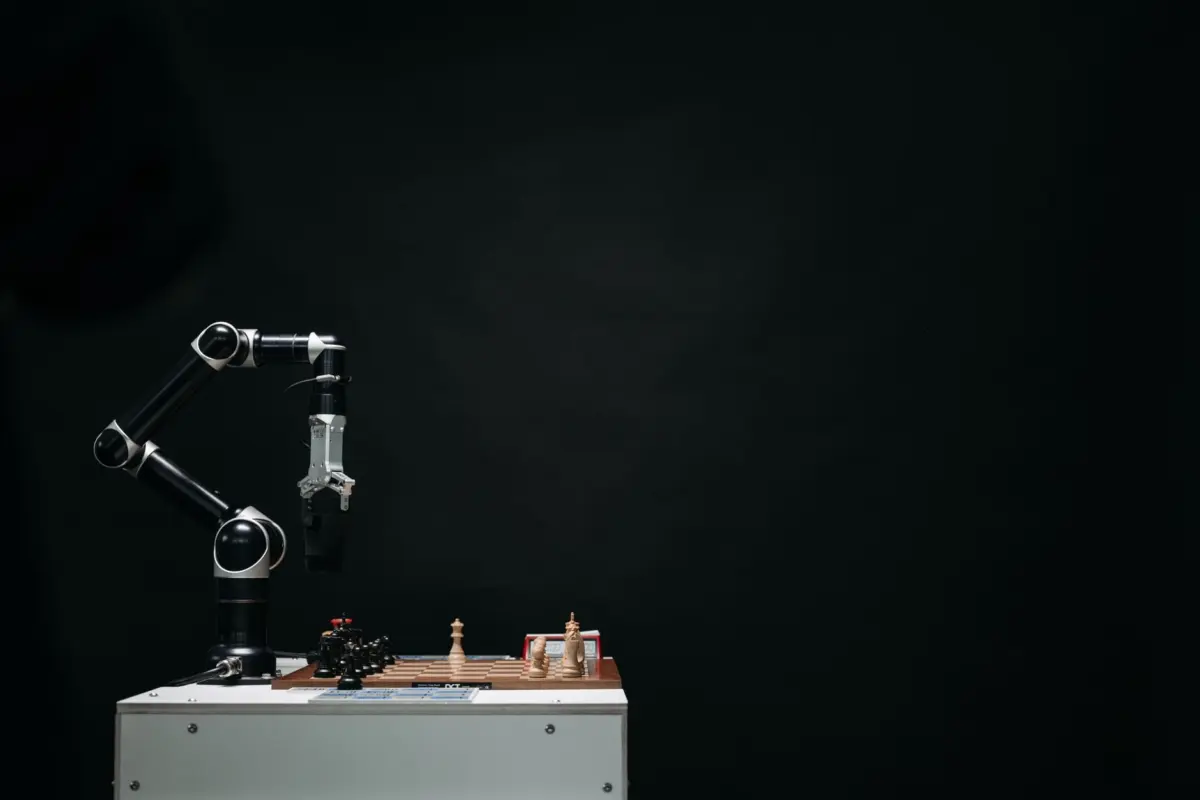
Public milestones also resumed. In the 1996 match, Deep Blue won only one of six games against Garry Kasparov, but it won the rematch in 1997. It could review 200 million potential chess moves in one second.
What started the deep learning boom?
Deep learning did not start with one breakthrough. It grew from several earlier developments:
- Learning from data: GeeksforGeeks says machine learning emerged in the 1990s, letting systems learn patterns directly from data instead of fixed rules.
- Renewed interest in neural networks: The Oregon State notes say connectionism has been overwhelmingly more popular since the late 1990s. The University of South Florida guide dates the revival to 2006 and credits growing computing power and larger datasets.
- Multi-layer networks: According to GeeksforGeeks, multi-layer neural networks in the 2000s–2010s enabled automatic learning of complex patterns from large datasets.
- A visible payoff: The USF guide says AlexNet dramatically improved image classification performance in 2012, accelerating AI use in areas like recognition.
If you need one date for the boom, 2012 is the clearest dated demonstration of the payoff, while the preceding steps explain why it became possible. The same pattern runs through the history: ideas such as the perceptron existed long before the compute and data to use them at scale.
For robots, better recognition mattered because a machine that moves must first interpret what it sees. The training side of that story is covered in Generative AI: How It Works — A Practical Guide To Models, Training, And Applications (2026).
Generative AI and robots since 2022
The latest myth is that today’s AI is a sudden arrival. In fact, it sits at the end of the chain above. The USF guide says OpenAI launched ChatGPT to the public in 2022, making conversational AI widely accessible. The Oregon State notes report that modern LLMs such as GPT-4 have been found to pass the Turing Test in specific settings, according to a Stanford study. The condition matters: the finding applies to specific settings, not to every test of human-like intelligence. It also closes a loop that began with Turing’s 1950 proposal.
Robots reflect the same period. The University of Oregon’s AI timeline lists Ingenuity, a small robotic helicopter operating on Mars as part of the Mars 2020 mission and deployed on April 3, 2021. It also lists Optimus Gen-2, an AI-powered humanoid robot with delicate hands, in 2023. Having AI does not make a machine a robot, and having a body does not make it intelligent; Is A Robot AI? A Clear, Modern Guide To Robots, Artificial Intelligence, And How They Work Together (2026) explains how the two fit together.
More background pieces sit in the Artificial Intelligence category.
Frequently asked questions
| Question | Answer |
|---|---|
| Who coined the term artificial intelligence? | GeeksforGeeks credits John McCarthy, who coined the term at the Dartmouth Conference in 1956. |
| Is ELIZA really the first chatbot? | Coursera says ELIZA is widely considered the first chatbot. Joseph Weizenbaum created it at MIT in 1966. |
| Has a language model passed the Turing test? | Oregon State course notes report that models such as GPT-4 have been found to pass it in specific settings, citing a Stanford study. |
| When did the phrase AI winter first appear? | Coursera says the term was first used in 1984. It describes the period from the late 1970s to early 1990s. |