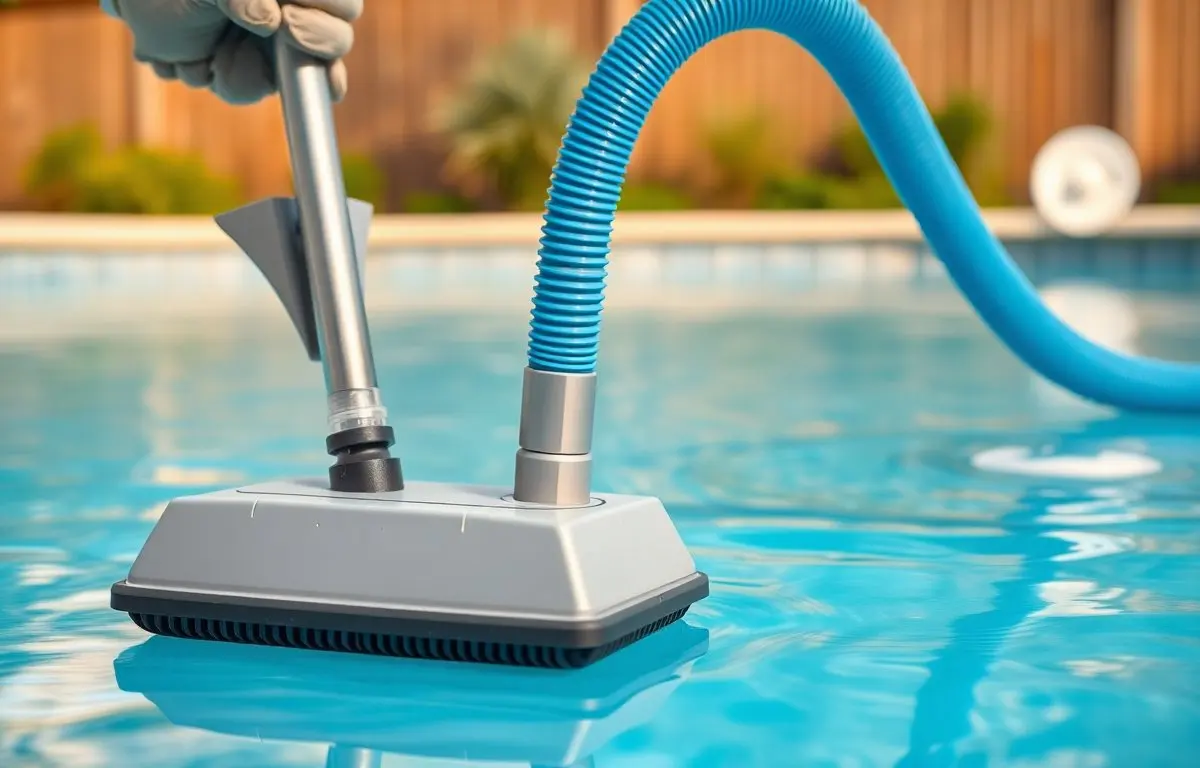
To vacuum a pool, the operator connects a telescoping pole, vacuum head, and hose to the filtration pump to remove settled dirt and debris from floors and walls. This process keeps water clear and reduces strain on filters and chemicals when done regularly. It’s a routine task that they can perform in one session or divide over several short passes depending on pool size and debris load.
Key Takeaways
- Vacuuming a pool regularly keeps water clear and reduces strain on filters and chemicals by removing settled dirt and debris.
- Manual vacuuming involves connecting a vacuum head, hose, and pump, then slowly cleaning pool floors and walls with overlapping passes to avoid stirring sediment.
- Always prime the vacuum hose before use and monitor filter pressure, cleaning or backwashing when pressure rises 8–10 psi above normal to maintain efficiency.
- Automatic or robotic pool vacuums are ideal for frequent light maintenance and larger pools, but manual vacuuming offers better control for heavy debris or targeted cleaning.
- After vacuuming, clean filters, inspect equipment for wear, and store gear properly to extend its life and keep your pool in top condition.
- Vacuuming once a week is generally sufficient, but increase frequency to 2–3 times weekly in pools with heavy leaf loads or high bather use.
What You Need Before You Start
Before starting, gather the essential equipment: a telescoping pole, vacuum head, vacuum hose, and a skimmer plate (or hose weight). They should also have the pool’s pump and filter manual handy and a leaf net for large debris. Optional but useful items are a vacuum plate adapter for the skimmer, replacement filter cartridges or a backwash-ready sand filter, and safety gear like non-slip shoes and goggles. Confirm water chemistry is balanced, excessive algae or cloudy water will slow progress and may require treatment before vacuuming.
Prepare The Pool And Equipment
Start by removing floating debris with a skimmer and brush the walls and steps to loosen grime. Inspect the vacuum head for worn bristles and the hose for cracks: replace parts if needed. If using the skimmer suction method, attach the vacuum hose to the head, then to the skimmer, and install the skimmer plate. For suction-side automatic vacuums, verify the pump is off when connecting. Prime the hose to remove air (one person can hold the hose while another slowly fills it from the pool). Finally, set the filter to the correct mode, usually “filter” for manual vacuuming or “waste” if removing lots of sediment.
Manual Vacuuming: Step-By-Step
Manual vacuuming is effective for precise cleaning and heavy debris.
- Attach the vacuum head to the telescoping pole and connect the hose to the head. Make sure connections are snug.
- Submerge the vacuum head and hose to fill the hose with water: stop when water flows from the far end to purge air.
- Connect the hose to the skimmer or suction port, secure the skimmer plate, and restore pump power.
- Move the vacuum head slowly in overlapping straight lines across the pool floor, avoid stirring up sediment with quick strokes.
- Vacuum walls and steps by angling the head and using short, deliberate passes.
- If the filter pressure rises sharply, backwash or clean the cartridge.
- When finished, turn off the pump, remove the hose, and return the filter to normal circulation.
Tips To Avoid Common Manual Vacuuming Mistakes
Avoid these frequent errors: don’t vacuum too fast, slow passes pick up fine particles better: don’t let the vacuum head ride, keep it flat on the floor to maintain suction: and don’t ignore filter pressure, clean the filter when pressure climbs 8–10 psi above baseline. Use the skimmer plate to prevent loss of suction, and avoid vacuuming during heavy wind to stop new debris from falling in. If algae is present, shock and brush first: vacuuming live algae can clog the filter quickly.
Using An Automatic Or Robotic Vacuum
Automatic suction or pressure-side vacuums and robotic cleaners save time for routine maintenance. Suction-side units use the pool pump and are cheap but can clog filters: they’re best when the pool has light debris. Pressure-side units work with a booster pump and deposit debris into an onboard bag, good for leaves. Robotic cleaners are independent, energy-efficient, and excellent at scrubbing tile lines and fine dirt. For any automatic, read the manual for correct hose routing, filter bag cleaning intervals, and placement to avoid leaving scuff marks on delicate surfaces.
When An Automatic Vacuum Is Better Than Manual
An automatic or robotic vacuum is preferable when the pool needs frequent light maintenance or when the owner has limited time. They’re ideal for medium-to-large pools with mostly small debris and for cleaners who want consistent weekly upkeep. Robotic units reduce load on the main filter and are efficient on tile lines. But, for targeted cleaning after major storms, bulky debris removal, or stubborn stains, manual vacuuming gives more control and accuracy.
Aftercare, Troubleshooting, And How Often To Vacuum
After vacuuming, backwash or clean the filter and empty any vacuum bags. Inspect hoses and heads for wear, and store gear dry to prevent mildew. Troubleshoot common issues: persistent cloudiness may mean the filter needs a chemical clean: loss of suction often points to air in the hose, a clogged skimmer basket, or a dirty filter. As for frequency, vacuuming once a week suits most pools: heavier leaf loads or high bather use may require 2–3 times weekly. Maintain routine brushing and skimming between vacuuming sessions to keep water clear.
H2: Frequently Asked Questions
Q: Can vacuuming remove algae?
A: Vacuuming removes dead algae and sediment after a proper chemical treatment and brush: it won’t replace shocking or algaecide for active blooms.
Q: Is it okay to vacuum with the pump off?
A: No, manual vacuuming requires the pump running to provide suction: prime the hose first to avoid air locks.
Q: Should the filter be on “waste” sometimes?
A: Yes, use the “waste” setting to bypass the filter when removing heavy sediment or after shocking to prevent clogging.
Q: How long does a robotic vacuum run?
A: Run time varies by model: most complete a standard cycle in 1–3 hours, check the manufacturer’s recommendations.
Frequently Asked Questions about How to Vacuum a Pool
What equipment do I need to vacuum a pool effectively?
You need a telescoping pole, vacuum head, vacuum hose, skimmer plate or hose weight, pool pump, and filter. Optional items include a vacuum plate adapter, replacement filter cartridges, and safety gear like goggles.
How do I prepare my pool before vacuuming?
Remove floating debris with a skimmer, brush walls and steps to loosen grime, inspect vacuum equipment for damage, and ensure water chemistry is balanced to improve vacuuming efficiency.
What is the correct method for manual pool vacuuming?
Attach the vacuum head to the pole and hose, submerge to fill with water, connect to the skimmer, then slowly vacuum in overlapping straight lines to avoid stirring sediment, finishing with the walls and steps.
When should I use the filter’s ‘waste’ setting during vacuuming?
Use the ‘waste’ setting when removing heavy sediment or after shocking the pool to bypass the filter and prevent clogging, ensuring efficient debris removal.
How often should I vacuum my pool for best results?
Vacuum your pool once a week for regular maintenance; increase to 2–3 times weekly with heavy leaf loads or high bather use to keep water clear and reduce filter strain.
Can vacuuming a pool remove algae effectively?
Vacuuming removes dead algae and sediment after chemical treatment and brushing, but it doesn’t replace the need for algaecide or shocking to treat active algae blooms.