A homeowner who wants a sparkling pool can get there by learning how to use a pool vacuum hose correctly: it cuts cleaning time and keeps filters working efficiently. The following sections explain what to gather, how to assemble and prime the hose, and practical vacuuming techniques plus maintenance so the job is faster and lasts longer.
Key Takeaways
- Using a kink-resistant pool vacuum hose properly cuts cleaning time and keeps your pool’s filter system efficient.
- Always prime the vacuum hose by submerging it fully to expel air and ensure strong suction before connecting to the pump.
- Vacuum slowly and methodically from shallow to deep ends, keeping the vacuum head flat to avoid stirring sediment and improve debris capture.
- Inspect hoses regularly for cracks or wear and rinse equipment after each use to prolong the life of your vacuum hose and attachments.
- Monitor filter pressure during vacuuming; a rise signals debris collection requiring filter cleaning or backwashing.
- Choose a vacuum head matched to your pool surface and use hose weights or heavier hoses to prevent kinking or floating during use.
What You Need Before You Start: Tools, Hose Types, And Safety Checks
Quick Facts
- Most residential pools use a leaf basket or debris bag plus a standard vacuum hose.
- Hoses come in 1.25 in and 1.5 in diameters: choose one that fits the skimmer or vacuum head.
- Always check the pump and filter pressure before vacuuming: low flow means poor suction.
Before anyone steps into action, assemble the right kit. At minimum, the homeowner needs a telescopic pole, a vacuum head suited to the pool surface (brush-style for vinyl, wider flat heads for concrete), a length of pool vacuum hose long enough to reach the deepest point plus the skimmer, and a working pump and filter. A vacuum plate or dedicated suction port is helpful when available. For safety, they should turn off the pump when connecting fittings and inspect hoses for cracks or brittle sections, old hoses leak and reduce suction.
Hose types matter. A kink-resistant hose is best for convenience: lighter hoses are easier to handle but can float or kink around steps. Heavier, ribbed hoses resist floating but need more careful routing. If the pool has a dedicated suction line, the user can attach the hose directly: otherwise, they’ll work through the skimmer.
Finally, check basic pool chemistry and clarity. Vacuuming works best when the water is clear enough to see debris. If the water is heavily green or cloudy, running the filter and shocking the pool or using a flocculant first will save time and prevent stirring up more problems.
Assembling And Connecting The Vacuum Hose: Priming, Fittings, And Attachments
A correct assembly and proper priming create full suction and prevent airlocks. Follow these numbered steps to set up the hose and attachments.
- Attach the vacuum head to the telescopic pole and secure it. Make sure the head matches the surface type.
- Connect one end of the hose to the vacuum head. Push the hose on firmly and lock any quick-fit clamps.
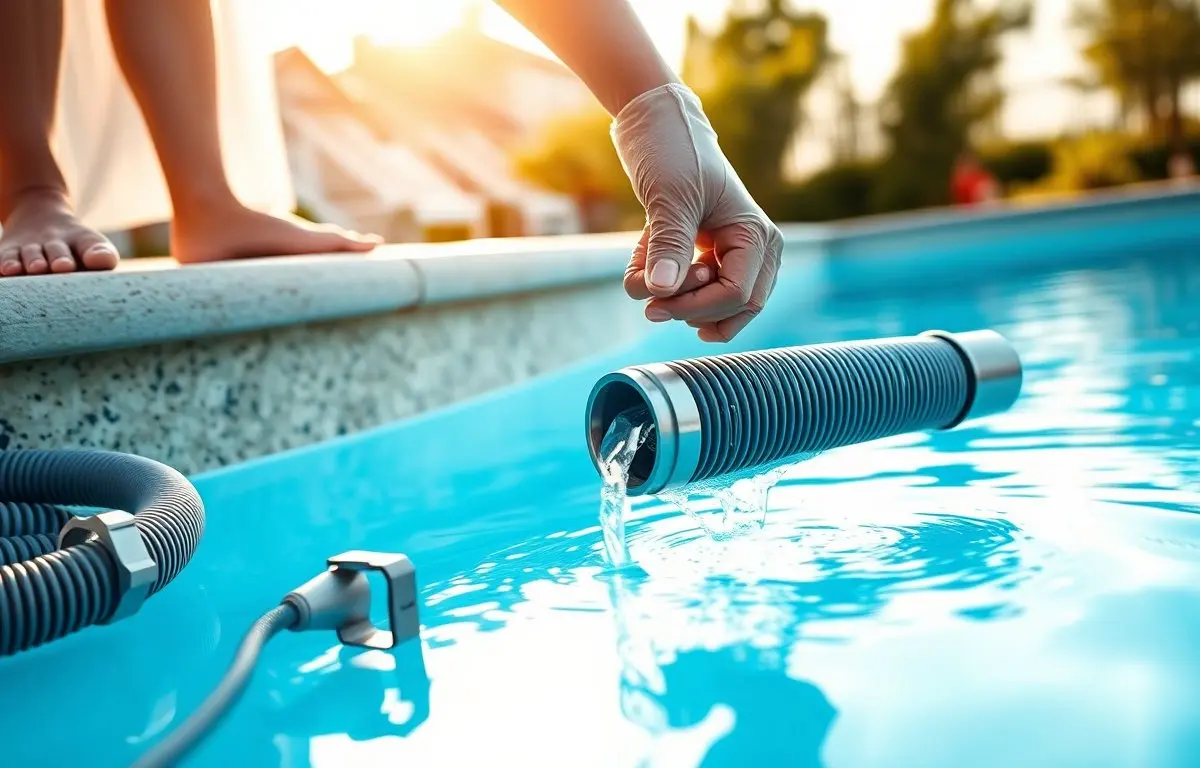
- Submerge the vacuum head and hose in the pool to fill the hose with water, letting air escape from the far end. This priming step is essential, air in the line breaks suction.
- When the hose is fully filled and water runs from the free end, plug that end into the skimmer suction fitting or vacuum plate while the pump is off. If using the skimmer, remove the skimmer basket and drop the hose end into the throat.
- Turn the pump on and check for consistent suction at the vacuum head. If suction is weak, turn the pump off and re-primethe hose to expel trapped air.
Common fittings include snap-on adapters for skimmers and threaded connectors for dedicated suction ports. If the hose won’t stay connected, a rubber coupling or hose clamp can secure it without damage. When the pump starts, the homeowner should watch the filter pressure: a quick rise indicates the system is collecting debris, backwashing or cleaning the filter cartridge may be needed sooner than usual.
If the pool uses a dedicated suction line with a vacuum plate, the process is similar but usually easier: the plate fits over the skimmer, creating a sealed connection and improving flow. Regardless of the method, never run the pump dry: it can damage the motor and heat the bearings.
Vacuuming Techniques, Common Problems, And Simple Maintenance Tips
Vacuuming technique affects speed and effectiveness. The recommended approach is to work slowly and systematically: start at the shallow end and move methodically toward the deep end, overlapping each pass by a few inches. Keep the vacuum head flat on the floor and pull it slowly, quick passes stir sediment and reduce capture. For corners and steps, tilt the head slightly to create more suction without scraping delicate surfaces.
Common problems and quick fixes:
- Weak suction: Recheck priming and hose connections: replace cracked hose sections: clean or backwash the filter if pressure rises.
- Hose kinking or floating: Re-route the hose along the pool bottom or use hose weights: choose a heavier hose for windy days.
- Cloudy water after vacuuming: Fine sediment can be stirred up. Run the filter longer or use a clarifier, and consider vacuuming to waste if the filter can’t trap the particles.
- Clogged vacuum head: Remove leaves and debris from the head and check the hose for blockages.
Maintenance tips extend the life of the hose and equipment. Rinse the hose and vacuum head with fresh water after each use to remove chlorine and scale. Store hoses coiled loosely out of direct sunlight to avoid brittleness. Inspect hose ends and fittings before each season and replace worn clamps or connectors.
Occasional proactive steps help too: run the pool filter for the recommended hours per day during heavy-use months, keep the skimmer basket clear so suction stays strong, and periodically check pump seals for leaks. A small investment in a quality, kink-resistant hose and a well-fitting vacuum head saves hours of work and reduces strain on the pump.
End of instructions.
Frequently Asked Questions about Using a Pool Vacuum Hose
How do I assemble and prime a pool vacuum hose correctly?
Attach the vacuum head to a telescopic pole, connect the hose firmly, then submerge both in the pool to fill with water, letting air escape. Plug the hose into the skimmer or suction port before turning on the pump to ensure full suction without airlocks.
What type of pool vacuum hose should I choose for the best performance?
Select a kink-resistant hose that fits your skimmer or vacuum head, commonly 1.25 or 1.5 inches in diameter. Lighter hoses are easier to handle but may float, while heavier ribbed hoses resist floating but require careful routing.
What are the best vacuuming techniques to clean my pool efficiently?
Work slowly and systematically from the shallow to deep end, overlapping passes slightly. Keep the vacuum head flat on the pool floor and pull gently to avoid stirring sediment. Tilt the head at corners and steps to increase suction without damaging surfaces.
Why does my pool vacuum have weak suction, and how can I fix it?
Weak suction usually results from air in the hose, cracked hoses, or a clogged filter. Re-prime the hose, check and replace damaged sections, and clean or backwash the filter to restore strong suction.
Can I use any pool vacuum hose with my skimmer or do I need special fittings?
Most hoses fit standard skimmers, but you may need snap-on adapters or threaded connectors for dedicated suction ports. Rubber couplings or hose clamps can secure fittings if connections are loose.
How should I maintain my pool vacuum hose to extend its life?
Rinse the hose and vacuum head with fresh water after each use, store hoses loosely coiled away from sunlight, inspect for wear before each season, and replace worn clamps or fittings to keep everything in good working order.