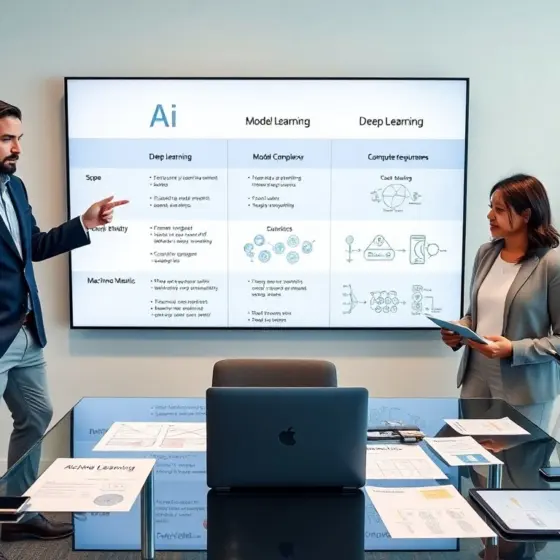

| Method | What it looks at | Main limit | Planning use |
|---|---|---|---|
| Statistical signals (perplexity, burstiness) | How predictable the words are and how much sentence length and structure vary; AI text tends to be more predictable and more uniform | Probabilistic; can misidentify human or AI text | Use a flag as a reason to read closer, not as a verdict |
| Trained classifier | Patterns learned from labelled human and AI samples; a classifier head outputs 0 for human or 1 for AI | Quality follows the quality of the training data | Prefer tools that explain how they were trained, and treat the output as a probability |
| Hidden markers (watermarking) | Markers that some AI tools embed in their output | Only works where the generating tool embedded a marker | Check for markers when the generating tool is known; a missing marker settles little |
| Plagiarism checker | Matches text against existing published sources | More definitive, but may miss paraphrasing | Use it for copying questions, not for authorship |
| Human judgement | Unaided reading by non-experts | No better than random guessing | Do not rely on gut feeling alone |
These comparisons draw on Grammarly’s explanation of AI detectors and Pangram’s overview of AI detection.
How does AI detection work? Detectors use machine learning to find statistical patterns that separate AI-generated text from human writing, then return a probability. That probability is a prompt for human review, not proof.
Text detection is one narrow use of machine learning. For the broader field, see how is ai used in robotics.
What a detector score should change
A detector result is an estimate, so the practical question is how much weight it deserves. Grammarly notes that these tools are inexact and can provide only probabilities, not definitive proof. GPTZero, a detector vendor, says no detector is perfect and results belong in a broader toolkit rather than leading to automatic punishment.
- Treat a flag as a reason to look closer. A high AI score tells you where to read carefully, ask about the drafting process or compare with earlier work. It does not establish who wrote the text.
- Keep a person in the decision. Any consequence for a writer, such as a grade, a rejection or a takedown, should rest on more than one automated score.
- Weigh the length of the text. Grammarly explains that short passages are harder to analyze, while longer texts give detectors more patterns to evaluate. A verdict on a few lines deserves less trust than one on a full document.
- Be most cautious with mixed drafts. GPTZero identifies documents containing both AI-generated and human-written content as the real challenge. A text that was drafted by a tool and then rewritten by a person is exactly where a single score is least dependable.
- Match the tool to the question. An AI detector estimates whether text was machine-generated. A plagiarism checker finds matches with existing sources. Pick the one that fits the concern.
Knowing how far to trust a score depends on how often detectors get it wrong and why.
Accuracy and false positives
No supplied source gives a single accuracy rate that holds across tools, and none should be assumed. Coursera says that even the most advanced AI detectors are far from foolproof. Accuracy depends on the detector, the data it was trained on and the kind of text it is asked to judge.
Why human writing gets flagged
A false positive is when a detector mistakenly predicts a human-written content sample as being AI-written. Detectors work from patterns, not from any knowledge of who wrote the text, so human writing that fits those patterns can be flagged. Grammarly warns that writers who speak English as an additional language may stump AI detectors. That makes a flag against such a writer a particularly weak basis for a decision.
Where errors run both ways
Errors are not limited to human text being flagged. Coursera points out that detectors can often misclassify content, so AI text can also pass as human. Reading the result as a probability rather than a yes-or-no answer is the safest way to account for both directions.
The errors make more sense once you see which signals the tools actually measure.
Signals detectors measure
Detectors rely on machine learning and natural language processing to recognize subtle differences between human and AI outputs. Two measures come up most often, and they are related.
Perplexity
Perplexity measures how predictable a sequence of words is. Pangram describes it as how unexpected each word is to a large language model. AI text tends to have lower perplexity, because a language model tends to choose likely words. Plain, highly conventional human writing can also read as predictable, which is one route to a false positive.
Burstiness
Grammarly defines burstiness as variations in sentence length and structure, and AI text tends to be more uniform. Pangram frames it as the change in perplexity over the course of a document. Both definitions point the same way: human writing tends to move between plain and surprising passages, while machine text is steadier.
Other stylistic features
Coursera adds that feature extraction can look at vocabulary diversity, average sentence length and punctuation usage. These are simple, countable traits, which is why they can be combined into a single estimate. They are also why heavy editing or an unusual personal style can shift a score.
How classifiers are trained
The signals feed a classifier, which sorts content by recognizable patterns. Coursera says these models employ classification techniques to categorize content based on recognizable patterns. Pangram describes the final step: a classifier head transforms the output embedding into a prediction labeled human or AI.
Training data sets the ceiling. In Coursera’s words, high-quality training data sets yield high-quality AI detectors. A detector trained on narrow or outdated samples will struggle with writing that looks different from what it saw. A classifier is a narrow, task-specific kind of machine learning, and 5 Main Types Of Artificial Intelligence: What They Are And Why They Matter In 2026 places systems like it among the broader categories of AI.
Watermarking and hidden markers
Watermarking means building a hidden marker into AI output so that it can be recognised later. Grammarly notes that some AI tools embed hidden markers in their output, which detection models can identify. The word “some” matters: a marker can only be found if the generating tool put it there, so a text with no marker is not shown to be human.
Provenance questions are just as live for pictures. How Text‑to‑Image AI Works: A Plain English Guide (2026) explains how image generators produce their output, which is the starting point for thinking about marking and checking it.
Frequently asked questions
Can people spot AI writing without a tool?
Not reliably. Pangram states that non-experts cannot do better than random guessing, so a hunch should not substitute for careful review.
Is an AI detector the same as a plagiarism checker?
No. An AI detector estimates whether text was machine-generated, while a plagiarism checker identifies content that matches existing sources, according to Grammarly. A plagiarism checker is more definitive but may miss paraphrasing.
Why can different detectors disagree on the same text?
Each detector is trained on its own data sets. Coursera cites this as a reason detectors can misclassify content, so a result from a single tool is best read as one estimate.